This is my health update, which apparently will come every year. I see from my interaction on Facebook's "Bone Marrow & Stem Cell Transplant Patient Support" group that bone marrow transplant patients like to compare notes on recovery and on recovery times; therefore, here is my current report.
I am seven years and three months post-transplant. I am off all medication associated with the transplant. My feet and lower legs have completely recovered from the neuropathy caused by Tacrolimus (Prograf). I stopped taking it in 2014. I cannot remember if I stopped taking it because of the diagnosis of my secondary cancer, Diffuse Large B-cell Lymphoma. Obviously, they wanted my immune system to be as strong as possible for fighting off the lymphoma.
The Rituximab that was part of the chemo for the lymphoma caused 9 months of neutropenia, but the chemo did put the lymphoma in remission. The neutropenia led to hemorrhoids that got worse and worse. The result was little exercise through the spring and summer of 2015, which set back my physical and mental recovery quite a bit. Time does help both the body and the brain recover from chemotherapy, especially in regard to memory.
I have found it difficult to recover strength. I do exercise, but the gains are minimal. This is not debilitating. I think am stronger than most 12-year-olds, less strong than most teenagers, even young ones. I can run, fast or slow, about 200 yards, and I can do that repeatedly if I walk for a while in between. I can walk several miles without any real difficulty except that my feet hurt. I used to run 20 or 30 miles per week in my 40's, so I miss that ability. I am not sure why I cannot build up past 200 yards of continuous running, but that has no effect on quality of life at age 57.
I work full-time. I have significantly more fatigue in the mornings than I had pre-leukemia, but I seem to have good energy by lunch time every day. I do not get sick any more often than I did before leukemia, and I generally recover just fine. I do have worse allergies than most people, but they are not terrible.
My life is wonderful. My youngest daughter will graduate from high school next month. She is a great kid. My wife and I love each other more than ever, and we are actively serving the Lord together. Her mother, diagnosed with Alzheimer's, lives with us, and my wife babysits our grandson two days per week. I am in the editing stage of my second full-length book. I still help run the business we own, mostly handling the finances while managers keep the business running smoothly. I also serve as an elder in the church here, so I have a very active life.
(I write about church history. Decoding Nicea sells about 40 copies a month nowadays. I am hoping the release of Taking Aim at Rome's Audacious Claim will boost its sales even more. I expect that to happen in September.)
That's my update. For those that came here because you were diagnosed with BPDCN, like I was, there is hope and life in front of you! I exhort you to put your hope in God through Jesus, but this blog has lots of practical advice and experience in it as well.
Grace to you!
Saturday, April 13, 2019


Saturday, May 26, 2018
This is just a notification that I am still alive and will turn 57 in July. The only medication I am taking is 2.5 mg of Prednisone, which is a very tiny pill. I suspect I could quit, and nothing would happen. I see Dr. Reddy to follow up on my lymphoma once per year, and I see a Nurse Practitioner named Melissa on the same or next day to follow up on the leukemia/BPDCN. Melissa is dropping the prednisone dose slowly because she said she doesn't want to "crash my adrenals." I suspect in January she will drop me to 2.5 mg every other day, then end it in 2020.
The lingering effects are that I don't have the energy I had before the leukemia, lymphoma, and the 9-month neutropenia that came after the lymphoma. (I think the 9-month neutropenia had the worst effect on me.) Getting back in shape is hard, and if I over-train, I get intense fatigue that can last for an extended period of time. Still, I am making slow progress. I can run a hundred-yard dash, which feels like sprinting, but would have been a jogging pace in high school. It takes 25-seconds to "sprint" that 100-yard dash. One of my workouts is to walk/run a mile fitting in about 5 or 6 of those 80-yard dashes. (I have 80 yards measured, not 100.)
On the other hand, I can walk miles. My feet hurt when I do, sometimes a lot. I've tried a lot of shoes, but nothing seems to help. My blood pressure and heart rate are good, but my cholesterol is terrible despite the fact that I have an excellent diet. On the other hand, I gave myself a heat stroke mowing the lawn for 45 minutes in July in Tennessee (90+ degrees and humid) wearing sun-protective clothing. The hospital gave me a thorough checkover because of this, and my arteries are clear. The cholesterol is not affecting my blood flow.
I can work as much as I want without tiring, but I have a desk job. Some days--but no mornings--I am bursting with energy. Other days I am not. I suppose that's pretty normal.
Oh, one more important thing: chemo and the nine-month neutropenia trashed my memory. About a year ago I heard that sage (the spice) improves memory. My wife had some sage tea ("Relaxed Mind" from Yogi), and I decided to give it a try. Success! Success! Success! Very noticeable improvement!
The cognitive test for whether the sage tea was working was a chess game on my phone I used to play. After the cancers, I played against it, and I had to keep lowering the levels. At some point, I got tired of being beat, and I quit playing. After a few weeks of sage tea, I opened the game again, and played it at the level I was losing at, and I won three games in a row. I am very excited about this, and as I said, the memory and clear thinking improvement is noticeable. One cup of sage tea a day. Who knew?
Not to go overboard with that, I am 57, and I seem to have the same sort of memory problems all my 50-some-year-old friends have. I can't think of words and names as well as I used to, but I'm no worse at that than my friends.
That's my six-year and four-month post-transplant follow-up.
The lingering effects are that I don't have the energy I had before the leukemia, lymphoma, and the 9-month neutropenia that came after the lymphoma. (I think the 9-month neutropenia had the worst effect on me.) Getting back in shape is hard, and if I over-train, I get intense fatigue that can last for an extended period of time. Still, I am making slow progress. I can run a hundred-yard dash, which feels like sprinting, but would have been a jogging pace in high school. It takes 25-seconds to "sprint" that 100-yard dash. One of my workouts is to walk/run a mile fitting in about 5 or 6 of those 80-yard dashes. (I have 80 yards measured, not 100.)
On the other hand, I can walk miles. My feet hurt when I do, sometimes a lot. I've tried a lot of shoes, but nothing seems to help. My blood pressure and heart rate are good, but my cholesterol is terrible despite the fact that I have an excellent diet. On the other hand, I gave myself a heat stroke mowing the lawn for 45 minutes in July in Tennessee (90+ degrees and humid) wearing sun-protective clothing. The hospital gave me a thorough checkover because of this, and my arteries are clear. The cholesterol is not affecting my blood flow.
I can work as much as I want without tiring, but I have a desk job. Some days--but no mornings--I am bursting with energy. Other days I am not. I suppose that's pretty normal.
Oh, one more important thing: chemo and the nine-month neutropenia trashed my memory. About a year ago I heard that sage (the spice) improves memory. My wife had some sage tea ("Relaxed Mind" from Yogi), and I decided to give it a try. Success! Success! Success! Very noticeable improvement!
The cognitive test for whether the sage tea was working was a chess game on my phone I used to play. After the cancers, I played against it, and I had to keep lowering the levels. At some point, I got tired of being beat, and I quit playing. After a few weeks of sage tea, I opened the game again, and played it at the level I was losing at, and I won three games in a row. I am very excited about this, and as I said, the memory and clear thinking improvement is noticeable. One cup of sage tea a day. Who knew?
Not to go overboard with that, I am 57, and I seem to have the same sort of memory problems all my 50-some-year-old friends have. I can't think of words and names as well as I used to, but I'm no worse at that than my friends.
That's my six-year and four-month post-transplant follow-up.
Wednesday, December 30, 2015
Back to Full Health
I'm going into the New Year ready to try something new: being healthy.
About six weeks ago, my neutrophils came back. It still strikes me as funny that all my friends now know what neutrophils are, but for those who don't, neutrophils are the most abundant cell in your immune system. They are the leading infection fighters ... unless you don't have any.
Here's the story, briefly revisited:
In November, 2014 I was diagnosed with lymphoma after a hospital visit for a blocked bowel. The tumor was right at the connection of my large and small intestines, and though they never measured it, they think it was about the size of a baseball.
The exact version of lymphoma was "enlarged b-cell diffuse lymphoma" or something like that. I didn't study it like I studied my leukemia. The lymphoma was supposed to be relatively easy to deal with, and so it was. I was supposed to get six rounds of chemo, and the rounds were going to be much easier than the leukemia chemos.
I only got four because after the fourth one, my immune system never recovered. My neutrophils never came back. That went on for nine months.
During those nine months, February to November of 2015, I got booster shots anywhere from 3-5 times per week. Those only boosted my neutrophils a little, and I had at least 10 visits to the emergency room for fever or vomiting. Most of those resulted in hospital admissions.
No one knew why I wasn't producing neutrophils. One of the chemotherapies I received was Rituximab, but the Vanderbilt doctors told me I just didn't fit the pattern for neutropenia associated with Rituximab. With Rituximab, one's neutrophils usually come back, then drop a month or two later. Not only that, my neutropenia didn't happen on the first dose of Rituximab, but the fourth.
My local hematologist-oncologist (blood cancer doctor) never worried. He assured me that whether it fit a pattern or not, my neutropenia would end. He would give me the booster shots to keep me as infection-free as possible, and we would wait.
We waited nine months, and now it's over.
It's weird. It's like the quiet after a storm. What do I do now? My life had been focused on blood draws, Neupogen™ shots, avoiding possible sources of infection, and making trips to the ER for nine months. Now all that was gone rather instantaneously.
Really, it's remarkable. When I stopped getting the almost daily Neupogen® shot, my energy returned. I'm almost weaned off the medications I was taking for the bone marrow transplant back in 2012 (for leukemia). I'm a normal person, boom!, just like that.
I spent the holidays with family, doing twice a week visits to the clinic to check my blood. I didn't have to avoid children. I could shake hands and hug without fear of getting sick. Weird.
So now it's December 30. I can't say I'm going to make New Year's resolutions this year, but I am going to schedule my time as though I were healthy. I'm going to write more and get back into my distribution business a bit more. Who knows? It's like returning from a long trip. I have to figure out what to do with my life.
About six weeks ago, my neutrophils came back. It still strikes me as funny that all my friends now know what neutrophils are, but for those who don't, neutrophils are the most abundant cell in your immune system. They are the leading infection fighters ... unless you don't have any.
Here's the story, briefly revisited:
In November, 2014 I was diagnosed with lymphoma after a hospital visit for a blocked bowel. The tumor was right at the connection of my large and small intestines, and though they never measured it, they think it was about the size of a baseball.
The exact version of lymphoma was "enlarged b-cell diffuse lymphoma" or something like that. I didn't study it like I studied my leukemia. The lymphoma was supposed to be relatively easy to deal with, and so it was. I was supposed to get six rounds of chemo, and the rounds were going to be much easier than the leukemia chemos.
I only got four because after the fourth one, my immune system never recovered. My neutrophils never came back. That went on for nine months.
During those nine months, February to November of 2015, I got booster shots anywhere from 3-5 times per week. Those only boosted my neutrophils a little, and I had at least 10 visits to the emergency room for fever or vomiting. Most of those resulted in hospital admissions.
No one knew why I wasn't producing neutrophils. One of the chemotherapies I received was Rituximab, but the Vanderbilt doctors told me I just didn't fit the pattern for neutropenia associated with Rituximab. With Rituximab, one's neutrophils usually come back, then drop a month or two later. Not only that, my neutropenia didn't happen on the first dose of Rituximab, but the fourth.
My local hematologist-oncologist (blood cancer doctor) never worried. He assured me that whether it fit a pattern or not, my neutropenia would end. He would give me the booster shots to keep me as infection-free as possible, and we would wait.
We waited nine months, and now it's over.
It's weird. It's like the quiet after a storm. What do I do now? My life had been focused on blood draws, Neupogen™ shots, avoiding possible sources of infection, and making trips to the ER for nine months. Now all that was gone rather instantaneously.
Really, it's remarkable. When I stopped getting the almost daily Neupogen® shot, my energy returned. I'm almost weaned off the medications I was taking for the bone marrow transplant back in 2012 (for leukemia). I'm a normal person, boom!, just like that.
I spent the holidays with family, doing twice a week visits to the clinic to check my blood. I didn't have to avoid children. I could shake hands and hug without fear of getting sick. Weird.
So now it's December 30. I can't say I'm going to make New Year's resolutions this year, but I am going to schedule my time as though I were healthy. I'm going to write more and get back into my distribution business a bit more. Who knows? It's like returning from a long trip. I have to figure out what to do with my life.
Friday, October 2, 2015
Neutropenia Forever?
For those of you that are following my second cancer journey, here's my update. First, a quick review.
Nov. 2014: Diagnosed with Diffuse Large B-Cell Lymphoma, probably caused by the immunosuppressives used to protect me from the transplanted immune system that cured my leukemia.
Dec. 2014 - Jan. 2015: Three rounds of typical chemotherapy with typical recovery. Remission achieved.
Feb. 2015: Three more rounds of chemotherapy left, but my blood counts don't bounce back from round 4.
Mar. - Sep. 2015: One of the two important White Blood Cells comes back. The other, neutrophils, does not.
Towards the end of August my local hemotologist-oncologist, my wife, and I come up with a treatment plan designed to keep me out of the hospital. I had had seven or eight emergency room trips since February and four or five hospital admissions.
The plan was, and is, to give me five Neupogen shots a week, one each day Monday through Friday. Neupogen (Growth-Colony Stimulation Factor) makes your bone marrow release cells into the blood stream. Generally, three or four days of Neupogen shots generally gets my neutrophils up into the high normal range, greatly reducing the chance of infection and disease.
That worked through September. In fact, even this week I did not wind up with any fevers or other problems that might put me in the emergency room. One thing did change this week. The Neupogen shot stopped working.
As of this morning, after four consecutive days of Neupogen shots, my neutrophil count was zero. No other blood cell counts had climbed, either.
I was shocked when I saw the counts. I smiled and said, "Frightening," to the nurse.
She replied, "Sure is."
Worse, one of the signs that the Neupogen is working is throbbing in my bones, especially my hips, lower back, and ribs. I had none of that this week, until this morning. This morning, though, the throbbing pain was pretty strong. I was somewhat excited about seeing my counts go up from the 100 neutrophils I had on Wednesday.
Being told they were at zero affected my like being slapped on the side of the head. When you're slapped hard like that, your ear rings, and it is hard to clear your thoughts till the pain goes away. When I heard the news, most of my energy drained out of me immediately. A somber mood took over everything from my stomach to my chest to my conscious thoughts.
I had to shake the reaction off to smile at the nurse. It took very little time for the peace of God to drop into my heart, though, and I felt a tinge of excitement. That's what happened to me four years ago when I was told I had leukemia. The grace was beyond description, and I went through the whole 10-month leukemia treatment excited and confident.
Lymphoma has not been like that. I have fought for faith. I have fought for joy. I have fought to keep my visitors and nurses happy and light. I have failed here and there, slipping into a temporary depression that required a lot of rest and drawing close to God, who did not seem to be drawing close to me.
During the last six months, God has not been easy on me. His presence has been rare. Just a few words for him have gotten us through. My wife heard, "This is for salvaiton." We don't know what that means.
I heard things like, "This isn't about your comfort." Other mornings, I could hear him telling me, "Don't be weak. Get up. You can do it."
I felt driven with no slack given. I am a disciple, so I am okay with that, but it was not easy. Two weekends ago, though, I hit the end of me. I came back from two full days that each ended with having to do a long favor for someone else. I was unable to maintain my cool Christian composure for those favors. My "yes" to the favors came out as "This is a nightmare!" I was not a cheerful giver.
The next day I was done. I wondered if God was trying to kill me. I doubted everything I had ever done for God. I hunted my memory for people that I was sure I had influenced positively. Several came to mind, all immediate family or very close friends. The thought of each one put a smile on my face despite the gray sense of doom hanging over all my other memories.
I told God, "I ruined my life for that book that the Protestants claim is their 'sole rule' for faith and practice. For almost all of them, it's not close to their sole rule. Their denominational traditions override the Bible in almost every one of their major doctrines. I made the Bible my sole rule, however, and it ruined my life. Today I don't even believe 'sola Scriptura.' I believe we need the guidance of the traditions the apostles gave to their churches (2 Thess. 2:15). Did I make a mistake fighting for what I saw in the Bible?"
I was really wondering if I had mostly wasted the last 33 years of my life.
I didn't want to look weak, so it took a long time that day to tell my wife I needed help. I was despairing of the value of my whole life, and I could see nothing in the future.
She called some friends to come help her help me, but then God intervened as only God can intervene. My 13-year-old daughter came in with a bizarre request. "Can we eat dinner on the roof?"
To make a long story short, I said yes, and we ate leftover Kentucky Fried Chicken on the "flat spot" on the roof of our house. I didn't even know our roof had a flat spot. It's right in the middle of the house. Apparently, Leilani had been walking around up there so she could enjoy the weather and the view of the lake out back.
How can you be depressed when you're eating Kentucky Fried Chicken on the roof with your wife and darling daughter?
The last two weeks, unless I am reading them wrong, have been God telling me, "You made it. You pushed all the way through. You went as far as you could go. I'll take it from here. Rest."
The grace I had experienced during leukemia returned. My joy returned without having to fight for it. I'm feeling taken care of and warmly loved, not driven.
The lastest sense of that was driving home from the clinic today. I was seized with an inexplicable happiness. Probably that was the prayers of others. My wife texted everyone we know.
Physically, I am not better. I didn't sleep well last night, so I looked up "permanent neutropenia" wondering if I was going to be like this for the rest of my life. I think only one or two people have had a permanent lack of neutrophils from lymphoma treatemt. More have had it from treatments for thyroid cancer. Still, the incidence of permanent neutropenia among those treated is no more than 1 in 3500.
I've had rarer odds than that happen to me through this double-cancer trek.
How can a body stop making neutrophils? It appears that some patients have created antibodies that defend against their own neutrophils! Wow!
Maybe that's my problem. The doctors tell me I have a normal amount of neutrophils in my bone marrow. They are either not getting out, or they are being destroyed as soon as they get into my blood.
Yikes!
Today, though? It just doesn't matter. I am with God. God is with me. What neutropenia? What blood problem?
Nov. 2014: Diagnosed with Diffuse Large B-Cell Lymphoma, probably caused by the immunosuppressives used to protect me from the transplanted immune system that cured my leukemia.
Dec. 2014 - Jan. 2015: Three rounds of typical chemotherapy with typical recovery. Remission achieved.
Feb. 2015: Three more rounds of chemotherapy left, but my blood counts don't bounce back from round 4.
Mar. - Sep. 2015: One of the two important White Blood Cells comes back. The other, neutrophils, does not.
Towards the end of August my local hemotologist-oncologist, my wife, and I come up with a treatment plan designed to keep me out of the hospital. I had had seven or eight emergency room trips since February and four or five hospital admissions.
The plan was, and is, to give me five Neupogen shots a week, one each day Monday through Friday. Neupogen (Growth-Colony Stimulation Factor) makes your bone marrow release cells into the blood stream. Generally, three or four days of Neupogen shots generally gets my neutrophils up into the high normal range, greatly reducing the chance of infection and disease.
That worked through September. In fact, even this week I did not wind up with any fevers or other problems that might put me in the emergency room. One thing did change this week. The Neupogen shot stopped working.
As of this morning, after four consecutive days of Neupogen shots, my neutrophil count was zero. No other blood cell counts had climbed, either.
I was shocked when I saw the counts. I smiled and said, "Frightening," to the nurse.
She replied, "Sure is."
Worse, one of the signs that the Neupogen is working is throbbing in my bones, especially my hips, lower back, and ribs. I had none of that this week, until this morning. This morning, though, the throbbing pain was pretty strong. I was somewhat excited about seeing my counts go up from the 100 neutrophils I had on Wednesday.
Being told they were at zero affected my like being slapped on the side of the head. When you're slapped hard like that, your ear rings, and it is hard to clear your thoughts till the pain goes away. When I heard the news, most of my energy drained out of me immediately. A somber mood took over everything from my stomach to my chest to my conscious thoughts.
I had to shake the reaction off to smile at the nurse. It took very little time for the peace of God to drop into my heart, though, and I felt a tinge of excitement. That's what happened to me four years ago when I was told I had leukemia. The grace was beyond description, and I went through the whole 10-month leukemia treatment excited and confident.
Lymphoma has not been like that. I have fought for faith. I have fought for joy. I have fought to keep my visitors and nurses happy and light. I have failed here and there, slipping into a temporary depression that required a lot of rest and drawing close to God, who did not seem to be drawing close to me.
During the last six months, God has not been easy on me. His presence has been rare. Just a few words for him have gotten us through. My wife heard, "This is for salvaiton." We don't know what that means.
I heard things like, "This isn't about your comfort." Other mornings, I could hear him telling me, "Don't be weak. Get up. You can do it."
I felt driven with no slack given. I am a disciple, so I am okay with that, but it was not easy. Two weekends ago, though, I hit the end of me. I came back from two full days that each ended with having to do a long favor for someone else. I was unable to maintain my cool Christian composure for those favors. My "yes" to the favors came out as "This is a nightmare!" I was not a cheerful giver.
The next day I was done. I wondered if God was trying to kill me. I doubted everything I had ever done for God. I hunted my memory for people that I was sure I had influenced positively. Several came to mind, all immediate family or very close friends. The thought of each one put a smile on my face despite the gray sense of doom hanging over all my other memories.
I told God, "I ruined my life for that book that the Protestants claim is their 'sole rule' for faith and practice. For almost all of them, it's not close to their sole rule. Their denominational traditions override the Bible in almost every one of their major doctrines. I made the Bible my sole rule, however, and it ruined my life. Today I don't even believe 'sola Scriptura.' I believe we need the guidance of the traditions the apostles gave to their churches (2 Thess. 2:15). Did I make a mistake fighting for what I saw in the Bible?"
I was really wondering if I had mostly wasted the last 33 years of my life.
I didn't want to look weak, so it took a long time that day to tell my wife I needed help. I was despairing of the value of my whole life, and I could see nothing in the future.
She called some friends to come help her help me, but then God intervened as only God can intervene. My 13-year-old daughter came in with a bizarre request. "Can we eat dinner on the roof?"
To make a long story short, I said yes, and we ate leftover Kentucky Fried Chicken on the "flat spot" on the roof of our house. I didn't even know our roof had a flat spot. It's right in the middle of the house. Apparently, Leilani had been walking around up there so she could enjoy the weather and the view of the lake out back.
How can you be depressed when you're eating Kentucky Fried Chicken on the roof with your wife and darling daughter?
The last two weeks, unless I am reading them wrong, have been God telling me, "You made it. You pushed all the way through. You went as far as you could go. I'll take it from here. Rest."
The grace I had experienced during leukemia returned. My joy returned without having to fight for it. I'm feeling taken care of and warmly loved, not driven.
The lastest sense of that was driving home from the clinic today. I was seized with an inexplicable happiness. Probably that was the prayers of others. My wife texted everyone we know.
Physically, I am not better. I didn't sleep well last night, so I looked up "permanent neutropenia" wondering if I was going to be like this for the rest of my life. I think only one or two people have had a permanent lack of neutrophils from lymphoma treatemt. More have had it from treatments for thyroid cancer. Still, the incidence of permanent neutropenia among those treated is no more than 1 in 3500.
I've had rarer odds than that happen to me through this double-cancer trek.
How can a body stop making neutrophils? It appears that some patients have created antibodies that defend against their own neutrophils! Wow!
Maybe that's my problem. The doctors tell me I have a normal amount of neutrophils in my bone marrow. They are either not getting out, or they are being destroyed as soon as they get into my blood.
Yikes!
Today, though? It just doesn't matter. I am with God. God is with me. What neutropenia? What blood problem?
Monday, May 18, 2015
Neutropenia Is Now Good News!
Usually a neutrophil count of 270, which is so low that it's considered "neutropenic," is bad. Today, though, a neutrophil count of 270 is wonderful! I was expecting zero.
Exactly one week ago I had a neutrophil count of 300. I refused a Neupogen shot (a white blood cell/neutrophil booster) on advice of my doctor at Vanderbilt and went through the week assuming I was neutropenic. For the last three months, I could be confident that if I didn't get a Neupogen or Neulasta shot, my neutrophils would drop to zero. Since those are the cells that fight bacteria, that means I have to wear a surgical mask, wash my hands all the time, avoid raw foods, etc. I can't even mow the lawn or do plumbing.
Today, after one week, I am still neutropenic, but I am not at zero! I am at 270! Something really has kicked in. Now we see how well it's kicked in. I'll get a blood check again next week, here locally. No more neupogen shots. My body has to do this on its own.
Exactly one week ago I had a neutrophil count of 300. I refused a Neupogen shot (a white blood cell/neutrophil booster) on advice of my doctor at Vanderbilt and went through the week assuming I was neutropenic. For the last three months, I could be confident that if I didn't get a Neupogen or Neulasta shot, my neutrophils would drop to zero. Since those are the cells that fight bacteria, that means I have to wear a surgical mask, wash my hands all the time, avoid raw foods, etc. I can't even mow the lawn or do plumbing.
Today, after one week, I am still neutropenic, but I am not at zero! I am at 270! Something really has kicked in. Now we see how well it's kicked in. I'll get a blood check again next week, here locally. No more neupogen shots. My body has to do this on its own.
Sunday, May 17, 2015
Nothing But Neutropenia
Thanks to Tamara for leaving a comment on my last blog and thus reminding me to update all those wonderful people who have been good enough to follow my journey and pray for me.
As of February, I am in remission for lymphoma. There's already a Leukemia and Lymphoma Society, so I guess if I'm going to start something for people like me, it will have to be the Leukemia and Lymphoma Club. I know at least one other person who could qualify for it, and that person also had a third cancer, breast cancer, before her leukemia and lymphoma bouts.
My remission has been confirmed several times.
Which brings me to the reason it has been confirmed several times.
After round 4 of my planned 6-round R-EPOCH treatment, I got an infection, then the flu.
I muddled through all that with a little barfing, a couple emergency room trips, some lying around in the hospital, and losing ten pounds. I hate having to rebuild my shoulders and thighs back to normal, and now leukemia, pneumonia, and lymphoma have all made me have to do it. Ah, well.
The real problem is that after the month of sickness in February, my neutrophils never recovered. That's the part of our immune system that fights bacteria. I wasn't making any, and no one knew why. My other counts stalled out, but they weren't dropping. The neutrophils, however, dropped to zero and made no effort to come back without booster shots (Neupogen).
My doctors at Vanderbilt were "at a loss." No explanation whatsoever.
I went home at the start of March to eat chicken soup, rest, and hope the doctors could figure something out.
I was getting my blood checked here in Memphis (3 hours from Vanderbilt in Nashville) with a local hematologist. He told me, "I've seen this before. Only twice out of hundreds of lymphoma patients, but it's a reaction to Rituximab. It's temporary, and we just need to wait it out.
He put me on a 3-day per week regimen of blood checks and Neupogen shots, which kept my neutrophils hovering between 500 and 1000. A reading of 1000 is bad, and 500 is right at the border of "neutropenia." If I'm neutropenic, I can't eat anything raw, I have to wear a surgical mask everywhere I go, and take extreme precaustions to avoid illness.
I did that all of March and April before I finally asked the hematologist how long he expected this to last. One of his patients recovered in days, and the other took six months.
SIX MONTHS?
There are studies backing up this hematologists theory. In fact, one metastudy I read suggested that up to 25% of lymphoma patients who receive Rituximab have "Late Onset Neutropenia."
It was very hard to determine from the metastudy how long the neutropenia lasted on average. It has been almost 4 months, more than 10 weeks, and over 70 days since I had a Rituximab dose. It's been so long that I don't even remember if my neutropenia was "late onset." I know was neutropenic during my flu bout in late February, so I suspect I haven't been making neutrophils since the last round of chemo.
Vanderbilt is tired of waiting I think. On Monday, the doctor called from there to give me the results of a marrow biopsy they have me to make sure I was really in remission. I was on my way in to the local hematologist's lab when they called. I took the call, said I wanted to go to Vanderbilt and see them again, and I was told, "Don't do any more blood checks this week. Don't take any neupogen shots, and come out here next week."
Next week is tomorrow. We'll go to Vanderbilt at 9:45 (leaving home at 6 am) to get blood counts check and talk with the doctor there again. The last time I was there, for the marrow biopsy just last week on Wednesday, my neutrophils shot up to a normal level, which was a real surprise. We were excited, but when I got back to Memphis, they tested me Friday (a week ago) at 500. On Monday I was at 300, and I haven't had a Neupogen shot since. If things haven't changed, I'll be at 0 (zero) tomorrow. If I have any neutrophils at all, it will be a terrific sign of finally recovering.
So I'm still in waiting and watching mode, despite the remission.
As of February, I am in remission for lymphoma. There's already a Leukemia and Lymphoma Society, so I guess if I'm going to start something for people like me, it will have to be the Leukemia and Lymphoma Club. I know at least one other person who could qualify for it, and that person also had a third cancer, breast cancer, before her leukemia and lymphoma bouts.
My remission has been confirmed several times.
Which brings me to the reason it has been confirmed several times.
After round 4 of my planned 6-round R-EPOCH treatment, I got an infection, then the flu.
I muddled through all that with a little barfing, a couple emergency room trips, some lying around in the hospital, and losing ten pounds. I hate having to rebuild my shoulders and thighs back to normal, and now leukemia, pneumonia, and lymphoma have all made me have to do it. Ah, well.
The real problem is that after the month of sickness in February, my neutrophils never recovered. That's the part of our immune system that fights bacteria. I wasn't making any, and no one knew why. My other counts stalled out, but they weren't dropping. The neutrophils, however, dropped to zero and made no effort to come back without booster shots (Neupogen).
My doctors at Vanderbilt were "at a loss." No explanation whatsoever.
I went home at the start of March to eat chicken soup, rest, and hope the doctors could figure something out.
I was getting my blood checked here in Memphis (3 hours from Vanderbilt in Nashville) with a local hematologist. He told me, "I've seen this before. Only twice out of hundreds of lymphoma patients, but it's a reaction to Rituximab. It's temporary, and we just need to wait it out.
He put me on a 3-day per week regimen of blood checks and Neupogen shots, which kept my neutrophils hovering between 500 and 1000. A reading of 1000 is bad, and 500 is right at the border of "neutropenia." If I'm neutropenic, I can't eat anything raw, I have to wear a surgical mask everywhere I go, and take extreme precaustions to avoid illness.
I did that all of March and April before I finally asked the hematologist how long he expected this to last. One of his patients recovered in days, and the other took six months.
SIX MONTHS?
There are studies backing up this hematologists theory. In fact, one metastudy I read suggested that up to 25% of lymphoma patients who receive Rituximab have "Late Onset Neutropenia."
It was very hard to determine from the metastudy how long the neutropenia lasted on average. It has been almost 4 months, more than 10 weeks, and over 70 days since I had a Rituximab dose. It's been so long that I don't even remember if my neutropenia was "late onset." I know was neutropenic during my flu bout in late February, so I suspect I haven't been making neutrophils since the last round of chemo.
Vanderbilt is tired of waiting I think. On Monday, the doctor called from there to give me the results of a marrow biopsy they have me to make sure I was really in remission. I was on my way in to the local hematologist's lab when they called. I took the call, said I wanted to go to Vanderbilt and see them again, and I was told, "Don't do any more blood checks this week. Don't take any neupogen shots, and come out here next week."
Next week is tomorrow. We'll go to Vanderbilt at 9:45 (leaving home at 6 am) to get blood counts check and talk with the doctor there again. The last time I was there, for the marrow biopsy just last week on Wednesday, my neutrophils shot up to a normal level, which was a real surprise. We were excited, but when I got back to Memphis, they tested me Friday (a week ago) at 500. On Monday I was at 300, and I haven't had a Neupogen shot since. If things haven't changed, I'll be at 0 (zero) tomorrow. If I have any neutrophils at all, it will be a terrific sign of finally recovering.
So I'm still in waiting and watching mode, despite the remission.
Wednesday, December 10, 2014
Diffuse Large B-cell Lymphoma with Myc rearrangement
My pathalogy report came back from Vanderbilt today. My Diffuse Large B-cell Lymphoma (DLBCL) is positive for "Myc." The NP pronounce it "Mick." This is known as a "Myc rearrangement." I don't know what that is, but I do know—after researching today—what that means.
Like what happened with the leukemia, a Myc rearrangement attached to DLBCL had a terrible prognosis just 3 or 4 years ago. It's great now.
Apparently, back in the ancient days of 2011 and 2012, all DLBCL diagnoses were treated with a regiment called R-CHOP. The letters stand for the names of 5 chemotherapies used. Except Prednisone, which is taken as a pill, all the chemos are administered in one day, then the patient goes home for 3 weeks, and 6 rounds are given.
With that regimen, 77% of DLBCL patients with Myc rearrangement died within 4 years. Now, though, they use a regimen called EPOCH-R, which stands for 6 chemo drugs, several of them the same as R-CHOP. As a result, right now it looks like 77% are surviving. The latest study came out just day before yesterday!
My first round was R-CHOP because pathology reports weren't back yet. From now on, though, I get EPOCH-R, which will require 5 days inpatient, including 96 straight hours of infusions. Five rounds to go.
Keep in mind that a 77% chance of survival seems "epic" (pun on EPOCH) to me. With leukemia, which also had a long name and a 5-letter acronym (BPDCN, see tabs above), what I found at first was 0% (zero!) chance of survival. Fortunately, that information was 2 or 3 years old, and it turned out I had a 20-25% chance of survival. Whew, much better!
So for leukemia, I was pretty convinced God told me I wasn't going to die. My faith was shaken when I found out my odds of survival were zero. It was easier for me to believe God was in control of a 1% chance situation. Somehow the concrete "You're going to die" was more frightening.
I have no such promise this time, but the church tells me that they still need me, so I'm pretty confident God will grant their desire.
There was a Christian from around AD 200 who said, "Our goal in this life is to get out of it as fast as we can." If we give ourselves fully to God, then we can expect there to be a lot of suffering in this world. We'll be looking forward to departing and being with King Jesus, which is far better.
Some of you may not realize that's the Christian path. Philippians 1:29 tells us that we have been "granted on behalf of Christ," not only to believe in him, but to suffer for his sake. James 1 tells us to rejoice in suffering, and Romans 5 assumes we rejoice in suffering.
A long time ago, before I found out that you can't just "name it and claim it" with God, I attended charismatic churches. We all wanted to pray until our building shook, like the Bible says happened in Jerusalem (Acts 4). We wanted to pray and praise till an earthquake happened, like what happened to Paul and Silas in Acts 16.
It never happened, but I found the missing ingredient over the last 3-1/2 years. Suffering. In both those instances mentioned in the last paragraph, there was intense suffering involved. Try praying and praising when you're in agony. People take notice. Things happen.
That's truly the way to shake the earth and set the prisoners free. Mix your prayer and praise with good, strong, God-given suffering.
Thank you, Lord, for such a gift!
Like what happened with the leukemia, a Myc rearrangement attached to DLBCL had a terrible prognosis just 3 or 4 years ago. It's great now.
Apparently, back in the ancient days of 2011 and 2012, all DLBCL diagnoses were treated with a regiment called R-CHOP. The letters stand for the names of 5 chemotherapies used. Except Prednisone, which is taken as a pill, all the chemos are administered in one day, then the patient goes home for 3 weeks, and 6 rounds are given.
With that regimen, 77% of DLBCL patients with Myc rearrangement died within 4 years. Now, though, they use a regimen called EPOCH-R, which stands for 6 chemo drugs, several of them the same as R-CHOP. As a result, right now it looks like 77% are surviving. The latest study came out just day before yesterday!
My first round was R-CHOP because pathology reports weren't back yet. From now on, though, I get EPOCH-R, which will require 5 days inpatient, including 96 straight hours of infusions. Five rounds to go.
Keep in mind that a 77% chance of survival seems "epic" (pun on EPOCH) to me. With leukemia, which also had a long name and a 5-letter acronym (BPDCN, see tabs above), what I found at first was 0% (zero!) chance of survival. Fortunately, that information was 2 or 3 years old, and it turned out I had a 20-25% chance of survival. Whew, much better!
So for leukemia, I was pretty convinced God told me I wasn't going to die. My faith was shaken when I found out my odds of survival were zero. It was easier for me to believe God was in control of a 1% chance situation. Somehow the concrete "You're going to die" was more frightening.
I have no such promise this time, but the church tells me that they still need me, so I'm pretty confident God will grant their desire.
There was a Christian from around AD 200 who said, "Our goal in this life is to get out of it as fast as we can." If we give ourselves fully to God, then we can expect there to be a lot of suffering in this world. We'll be looking forward to departing and being with King Jesus, which is far better.
Some of you may not realize that's the Christian path. Philippians 1:29 tells us that we have been "granted on behalf of Christ," not only to believe in him, but to suffer for his sake. James 1 tells us to rejoice in suffering, and Romans 5 assumes we rejoice in suffering.
A long time ago, before I found out that you can't just "name it and claim it" with God, I attended charismatic churches. We all wanted to pray until our building shook, like the Bible says happened in Jerusalem (Acts 4). We wanted to pray and praise till an earthquake happened, like what happened to Paul and Silas in Acts 16.
It never happened, but I found the missing ingredient over the last 3-1/2 years. Suffering. In both those instances mentioned in the last paragraph, there was intense suffering involved. Try praying and praising when you're in agony. People take notice. Things happen.
That's truly the way to shake the earth and set the prisoners free. Mix your prayer and praise with good, strong, God-given suffering.
Thank you, Lord, for such a gift!
Tuesday, December 9, 2014
A New Cancer: Lymphoma and Faith
So I have cancer one more time.
Based on what my doctor said, it's an easier one this time. I doubt lymphoma is always less dangerous than leukemia, but in my case, it is. This is Little League compared to the Big League version of leukemia I had.
I get to face chemo at home, here in Memphis with my brothers and sisters, though the final authorities on my treatment will be the stem cell transplant team at Vanderbilt in Nashville.
Hearts are tricky. We have to guard our heart because out of it come the wellsprings of life, but we cannot trust it. Without the daily exhortation of the saints, the craftiness of sin will disguise bad as good and make our hearts unmalleable.
For me, cancer has been the great revealer. Leukemia answered questions about my heart that nothing else could have. Do I believe what I teach, that it is far better to depart and be with the King, or will I shrink in terror when death comes near? As it turns out, physical death came and breathed in my face, and I smiled at him. He found nothing in me, and he went his way.
I told people that if they were faithful in the little things, that if they bit their lip when they wanted to insult, that if they gave way when they wanted to step forward, that if they eschewed glory rather than pursuing it, that all the little acts of faithfulness would give them strength for the big acts of faithfulness.
I repeated Amy Carmichael's words: "In acceptance lieth peace." I repeated Watchman Nee's teaching that the circumstances that come to us are God's chisel, molding us to fit precisely into his eternal temple.
But I had no way of knowing whether I believed those words until I was writhing in pain on a hospital bed, in honest gratefulness that I might be delivered from my soft American ways and be a soldier in God's kingdom.
So here comes the chisel again, shaping the hardness of my heart to the power of his will, making me fit into the stones that surround me in the wall of the temple of God.
Such chiseling, shaping, and smoothing does not come by prayer or discipline. It comes by troubles and suffering.
Mia Hamm, the great women's soccer player, once said that the image of a champion is not holding a trophy aloft, but bent over, gasping for breath, and drenched in sweat long after everyone else has gone home.
The picture of the faithful saint does not consist of the sweat of labor, but of songs through tears and cries of praise in the midst of groaning. It is joy in suffering, and as Paul and Silas proved, that joy and those songs shake the earth and set the captives free.
We don't have to make the best of the suffering that comes our way. It already is the best. We just need to embrace it.
"May all who come behind us find us faithful."—Steve Green.
If the following video doesn't load for you, listen on YouTube.
Based on what my doctor said, it's an easier one this time. I doubt lymphoma is always less dangerous than leukemia, but in my case, it is. This is Little League compared to the Big League version of leukemia I had.
I get to face chemo at home, here in Memphis with my brothers and sisters, though the final authorities on my treatment will be the stem cell transplant team at Vanderbilt in Nashville.
How Should I React?
Hearts are tricky. We have to guard our heart because out of it come the wellsprings of life, but we cannot trust it. Without the daily exhortation of the saints, the craftiness of sin will disguise bad as good and make our hearts unmalleable.
For me, cancer has been the great revealer. Leukemia answered questions about my heart that nothing else could have. Do I believe what I teach, that it is far better to depart and be with the King, or will I shrink in terror when death comes near? As it turns out, physical death came and breathed in my face, and I smiled at him. He found nothing in me, and he went his way.
I told people that if they were faithful in the little things, that if they bit their lip when they wanted to insult, that if they gave way when they wanted to step forward, that if they eschewed glory rather than pursuing it, that all the little acts of faithfulness would give them strength for the big acts of faithfulness.
I repeated Amy Carmichael's words: "In acceptance lieth peace." I repeated Watchman Nee's teaching that the circumstances that come to us are God's chisel, molding us to fit precisely into his eternal temple.
But I had no way of knowing whether I believed those words until I was writhing in pain on a hospital bed, in honest gratefulness that I might be delivered from my soft American ways and be a soldier in God's kingdom.
So here comes the chisel again, shaping the hardness of my heart to the power of his will, making me fit into the stones that surround me in the wall of the temple of God.
Such chiseling, shaping, and smoothing does not come by prayer or discipline. It comes by troubles and suffering.
Mia Hamm, the great women's soccer player, once said that the image of a champion is not holding a trophy aloft, but bent over, gasping for breath, and drenched in sweat long after everyone else has gone home.
The picture of the faithful saint does not consist of the sweat of labor, but of songs through tears and cries of praise in the midst of groaning. It is joy in suffering, and as Paul and Silas proved, that joy and those songs shake the earth and set the captives free.
We don't have to make the best of the suffering that comes our way. It already is the best. We just need to embrace it.
"May all who come behind us find us faithful."—Steve Green.
If the following video doesn't load for you, listen on YouTube.
Sunday, August 24, 2014
SL-401 Study for BPDCN and AML Patients
Honestly, I don't understand SL-401 treatment that well, but I know it has worked at least a couple times for those with no other hope. It's a promising new treatment.
Now Stemline Therapeutics has announced a study of SL-401 for BPDCN (Blastic Plasmacytoid Dendritic Cell Neoplasm) and AML (Acute Myeloid Leukemia) patients. The announcement is here:
http://www.marketwatch.com/story/stemline-therapeutics-announces-opening-of-sl-401-corporate-ind-and-start-of-clinical-trials-in-bpdcn-and-aml-2014-07-28
You might want to ask your doctor about it if your treatment is failing, if you have relapsed, or if you are not eligible for a bone marrow transplant.
Now Stemline Therapeutics has announced a study of SL-401 for BPDCN (Blastic Plasmacytoid Dendritic Cell Neoplasm) and AML (Acute Myeloid Leukemia) patients. The announcement is here:
http://www.marketwatch.com/story/stemline-therapeutics-announces-opening-of-sl-401-corporate-ind-and-start-of-clinical-trials-in-bpdcn-and-aml-2014-07-28
You might want to ask your doctor about it if your treatment is failing, if you have relapsed, or if you are not eligible for a bone marrow transplant.
Thursday, August 14, 2014
Update on the New Norm
2.5 years post-transplant, here's my recovery status:
Medicines
I had a lot of acute GVH of the skin, and almost no other GVH. They say to avoid rash on over 50% of your body, but I was regularly over that. The rash was red, had bumps, but only itched a little. It did not hurt.
To get rid of it, we had to go up to 30mg of Prednisone, a steroid, in the summer of 2013. We've been easing down ever since. Because I had pneumonia in January, 2014, the doctors have been more aggressive in trying to reduce my immunosuppressives.
As a result, I am now at 7.5 mg of Prednisone and a half gram of Tacrolimus (ProGraf). The doctors dropped my antifungal (Voriconazole, and used to be Fluconazole) at the last appointment, July 25. They said that would reduce the immunosuppressive effect of the ProGraf, which is already at an amount they call minimal.
I still take an antibiotic and antiviral every day as a backup because of the mild immunosuppression. I also take Bactrim (another antibiotic) three times a week to prevent pneumonia. Obviously, that didn't work, but I'm still taking it.
Health
I have been on Coumadin (Warfarin), a blood thinner for almost a year because I had my third post-transplant blood clot last fall. It's also the third blood clot of my life. Those can be painful.
Throughout 2013, and maybe some of 2012, I had some tingling, numbness, and pain (neuropathy?) in my feet. It got worse throughout 2013, then was steady in 2014 until April. In April, my ProGraf was dropped in half to the 500 mg I take now. My feet began improving immediately, and my blood thinned to an almost dangerous level over the next couple weeks. We had to lower the amount of Coumadin I was taking.
I think the ProGraf was thickening my blood, causing the clots when I didn't take Coumadin, and combatting the Coumadin when I did. Dropping the ProGraf made the Coumadin work much better.
We dropped the Prednisone again 7/25, and now, just 3 weeks later, I have no feet problems. They feel great, and I am back to walking and even running some. I love it, though the year of foot pain that was increased by walking has left me weaker and less motivated.
I am pressing through anyway.
I am also getting stronger faster than I was. Yay! I'm still not back to my old average strength self, but I'm close.
I did a plank (pushup position but with elbows on the floor rather than hands) and held it for 90 seconds the other night. That's pretty good for an old guy like me. The sad part is that I can't blame my potgut on weak stomach muscles. I am just fat.
Only 20 pounds to lose, though.
Chronic Fatigue Syndrome
After 2012 (transplant performed 1/17/2012, very thorough preparation, including radiation, full body and brain), my problems with fatigue were much better. Really, I was doing somewhat okay even 6 months post-transplant, in summer of 2012.
I'd say throughout 2013 I had what I call "fatigue days" almost weekly, maybe every two weeks. I dragged, and trying to exercise just made it worse. On those days I had no appetite, and usually me energy and appetite both returned at the same time.
The fatigue days still happen, but more rarely, and often I can point to a cause, somewhere that I've overdone it physicall or mentally.
I can work 40 hours per week at a desk with no problem.
I own a distribution business. We moved our warehouse between Christmas and New Years, Dec. 25-30, 2014. On one of the first days I helped load pallet racks for three hours, pulling 10 pound to 30 pound boxes off pallets and handing them to someone else to put on shelves. I was very proud of myself.
I was useless the rest of the week. I definitely could not do an active job like that for more than 10 hours per week. Of course, I'm 53, and I haven't been able to exercise like a healthy person for three years now. Now that my feet are better and I'm responding to exercise better, that may change.
Eye GVH
I still have the occassional attack of eye GVH, but I no longer need any medication to treat it. I started expressing oil from my eyelids, and that has eliminated all suffering from GVH of the eye.
Dry Eye Zone expresses concerns about my method. It has staved off GVH to the point that my eye doctor said my eyes are fine and that I don't need to see her anymore. Therefore, I am going to continue, but I can't recommend that to you, anyway. The warm compresses suggested on that site are surely a better idea, anyway.
Okay, thanks! This update was mostly to provide a comparison for others of you wondering if you're ever going to get better.
Medicines
I had a lot of acute GVH of the skin, and almost no other GVH. They say to avoid rash on over 50% of your body, but I was regularly over that. The rash was red, had bumps, but only itched a little. It did not hurt.
To get rid of it, we had to go up to 30mg of Prednisone, a steroid, in the summer of 2013. We've been easing down ever since. Because I had pneumonia in January, 2014, the doctors have been more aggressive in trying to reduce my immunosuppressives.
As a result, I am now at 7.5 mg of Prednisone and a half gram of Tacrolimus (ProGraf). The doctors dropped my antifungal (Voriconazole, and used to be Fluconazole) at the last appointment, July 25. They said that would reduce the immunosuppressive effect of the ProGraf, which is already at an amount they call minimal.
I still take an antibiotic and antiviral every day as a backup because of the mild immunosuppression. I also take Bactrim (another antibiotic) three times a week to prevent pneumonia. Obviously, that didn't work, but I'm still taking it.
Health
I have been on Coumadin (Warfarin), a blood thinner for almost a year because I had my third post-transplant blood clot last fall. It's also the third blood clot of my life. Those can be painful.
Throughout 2013, and maybe some of 2012, I had some tingling, numbness, and pain (neuropathy?) in my feet. It got worse throughout 2013, then was steady in 2014 until April. In April, my ProGraf was dropped in half to the 500 mg I take now. My feet began improving immediately, and my blood thinned to an almost dangerous level over the next couple weeks. We had to lower the amount of Coumadin I was taking.
I think the ProGraf was thickening my blood, causing the clots when I didn't take Coumadin, and combatting the Coumadin when I did. Dropping the ProGraf made the Coumadin work much better.
We dropped the Prednisone again 7/25, and now, just 3 weeks later, I have no feet problems. They feel great, and I am back to walking and even running some. I love it, though the year of foot pain that was increased by walking has left me weaker and less motivated.
I am pressing through anyway.
I am also getting stronger faster than I was. Yay! I'm still not back to my old average strength self, but I'm close.
I did a plank (pushup position but with elbows on the floor rather than hands) and held it for 90 seconds the other night. That's pretty good for an old guy like me. The sad part is that I can't blame my potgut on weak stomach muscles. I am just fat.
Only 20 pounds to lose, though.
Chronic Fatigue Syndrome
After 2012 (transplant performed 1/17/2012, very thorough preparation, including radiation, full body and brain), my problems with fatigue were much better. Really, I was doing somewhat okay even 6 months post-transplant, in summer of 2012.
I'd say throughout 2013 I had what I call "fatigue days" almost weekly, maybe every two weeks. I dragged, and trying to exercise just made it worse. On those days I had no appetite, and usually me energy and appetite both returned at the same time.
The fatigue days still happen, but more rarely, and often I can point to a cause, somewhere that I've overdone it physicall or mentally.
I can work 40 hours per week at a desk with no problem.
I own a distribution business. We moved our warehouse between Christmas and New Years, Dec. 25-30, 2014. On one of the first days I helped load pallet racks for three hours, pulling 10 pound to 30 pound boxes off pallets and handing them to someone else to put on shelves. I was very proud of myself.
I was useless the rest of the week. I definitely could not do an active job like that for more than 10 hours per week. Of course, I'm 53, and I haven't been able to exercise like a healthy person for three years now. Now that my feet are better and I'm responding to exercise better, that may change.
Eye GVH
I still have the occassional attack of eye GVH, but I no longer need any medication to treat it. I started expressing oil from my eyelids, and that has eliminated all suffering from GVH of the eye.
Dry Eye Zone expresses concerns about my method. It has staved off GVH to the point that my eye doctor said my eyes are fine and that I don't need to see her anymore. Therefore, I am going to continue, but I can't recommend that to you, anyway. The warm compresses suggested on that site are surely a better idea, anyway.
Okay, thanks! This update was mostly to provide a comparison for others of you wondering if you're ever going to get better.
Wednesday, July 23, 2014
Marrow Donors and Transplants
I haven't posted on here in a long time. There are some leftover issues, of course, but leukemia/BPDCN is pretty much in the past for me now. My "new normal" is a whole lot like my old one except that I'm slower and can't run very far.
Anyway, some asked me about being a marrow donor, and this discussion of bone marrow or stem cell donation seemed pretty informative, so I'm posting it here, too, just in case you find it helpful.
How to Donate Marrow
Just go to marrow.org and sign up. They will mail you a donor package with lots of information. You swab your cheek, put it in, uh, something they sent you, and you send it back. That's enough to find out if you _might_ be a match. That's it. The likelihood they'll call you is pretty slim. If they do, then they'll want blood to check your DNA for 10-14 genetic factors. If you're an exact match, or really close, and you're the only one, they'll call you. Giving marrow is, literally, a real pain in the butt for about a week. "Feels like a mule kicked you in the backside," I was told. Nowadays, they usually take stem cells. They give you medicine for a week that makes your marrow run wild and its stem cells pour into your bloodstream. Your bones ache for a week, and then they take the stem cells out with a machine very similar to a dialysis machine, the ache goes away, and you go home.
That's the whole process, but only 1 in 500 people who sign up are called on as donors. It takes that much to find "the match." So, for the most part, your action is just to order the kit and send in the swab. Easy.
I know of someone who had 50 people come up on the list as potential donors. Only 3 turned out after blood tests to both be willing and to be a good match. One turned out to be a perfect match.
For me, they found 3 potentials in the whole world and none of them were a workable match after blood tests. My brothers were a complete mismatch, and my sister was the lowest acceptable match. Fortunately, nowadays women donate their placentas and cord (at some hospitals) and cord blood doesn't have to match near as well as adult blood. I got cord blood, which is usually not preferred, but for someone as harshly prepped as I was, the immature baby immune system that those stem cells created in me turned out to be a blessing. It's not as strong as an adult transplant, so it kept me a little safer.
Is this TMI? This process is amazing to me. Some people really need an adult transplant because the new immune system has to go in and destroy any lurking cancer cells. They thought I was healthy enough and had a good enough attitude that they would just use a scorched earth policy on every possible hiding place they could think of. The baby immune system didn't have anything left to clean up.
Sometimes there is a battle between what is left of the patient's marrow and the donor marrow. I have a friend almost three years after transplant who still has 2% of his own old marrow. Not me. I was 100% donor the first time they checked because they did an excellent job getting my marrow to 0% even before the transplant.
Anyway, some asked me about being a marrow donor, and this discussion of bone marrow or stem cell donation seemed pretty informative, so I'm posting it here, too, just in case you find it helpful.
How to Donate Marrow
Just go to marrow.org and sign up. They will mail you a donor package with lots of information. You swab your cheek, put it in, uh, something they sent you, and you send it back. That's enough to find out if you _might_ be a match. That's it. The likelihood they'll call you is pretty slim. If they do, then they'll want blood to check your DNA for 10-14 genetic factors. If you're an exact match, or really close, and you're the only one, they'll call you. Giving marrow is, literally, a real pain in the butt for about a week. "Feels like a mule kicked you in the backside," I was told. Nowadays, they usually take stem cells. They give you medicine for a week that makes your marrow run wild and its stem cells pour into your bloodstream. Your bones ache for a week, and then they take the stem cells out with a machine very similar to a dialysis machine, the ache goes away, and you go home.
That's the whole process, but only 1 in 500 people who sign up are called on as donors. It takes that much to find "the match." So, for the most part, your action is just to order the kit and send in the swab. Easy.
I know of someone who had 50 people come up on the list as potential donors. Only 3 turned out after blood tests to both be willing and to be a good match. One turned out to be a perfect match.
For me, they found 3 potentials in the whole world and none of them were a workable match after blood tests. My brothers were a complete mismatch, and my sister was the lowest acceptable match. Fortunately, nowadays women donate their placentas and cord (at some hospitals) and cord blood doesn't have to match near as well as adult blood. I got cord blood, which is usually not preferred, but for someone as harshly prepped as I was, the immature baby immune system that those stem cells created in me turned out to be a blessing. It's not as strong as an adult transplant, so it kept me a little safer.
Is this TMI? This process is amazing to me. Some people really need an adult transplant because the new immune system has to go in and destroy any lurking cancer cells. They thought I was healthy enough and had a good enough attitude that they would just use a scorched earth policy on every possible hiding place they could think of. The baby immune system didn't have anything left to clean up.
Sometimes there is a battle between what is left of the patient's marrow and the donor marrow. I have a friend almost three years after transplant who still has 2% of his own old marrow. Not me. I was 100% donor the first time they checked because they did an excellent job getting my marrow to 0% even before the transplant.
Friday, May 9, 2014
The New Normal Can Be Pretty Normal
I think this last week is the first one in which being a transplant patient just didn't come up. Yeah, I got asked about how I was doing. I have a lot of friends who care about me, but I had to say, "I haven't thought about it."
I take my pills every day, though I hope for them to be reduced drastically on my next visit to Vanderbilt (in July). They are a reminder that something very difficult happened to my body. I still can't run very well. My sprint is a joke, and a quarter mile would be a long jog.
My feet are getting better, though. They burn, tingle and feel numb much less than they did a few months ago. My stem cell transplant doctor tells me that's because we're reducing the steroids.
Otherwise, I just go about my life. Every now and then I have a day where everything is difficult. I don't want to get out of bed, and everything I do is like slogging through swamp. Usually, I just cancel those days and hang out in bed. Nothing fixes it.
Those days are few and far between, though they do happen once or twice a month. It's only been two or three weeks since the last one. Nonetheless, nothing about my bout with leukemia (and especially the stem cell transplant, which was by far the hardest thing) has affected me enough for me to think about leukemia over this last week.
The burning in my feet kept the reminder alive for the last few months, but though they burn some now, and they swell if I sit too much, it's so minor now that I don't think about it. I have to sleep close to 8 hours for the swelling to go away, but that's a habit now.
Best of all, the exercise I try to do every day is finally working! I do odd body-weight exercises because I'm so weak compared to my pre-leukemia days, but now I'm progressing to more normal exercises (like pushups). I can carry groceries in without gasping for breath because of the exertion. I pick things up and move them around like I'm an adult male.
Actually, the strength part was pretty good in the last part of 2013, too. Pneumonia in January of this year sapped an incredible amount of muscle from me, especially considering I was only down for about two weeks. It's May, and I've finally got all my strength back that I had in December.
I work all day without thinking much about it, although many leukemia survivors, especially transplant recipients, never return to full-time work.
I am two years and four months past transplant, and I got a serious preparation for that transplant. I used up my radiation allotment for my whole life. If I ever get prostate cancer, like a lot of men do, there will be no radiation option for me. Radiation worked excellently for my dad. The surgery sounds pretty unpleasant, so my plan is to avoid prostate cancer.
Here I am, though. I'm kickin', everything seems to be working in my body, and I like the new norm. Physically, it's not much worse than the old norm, and in peace and wisdom, I am far ahead of where I would have been without that wonderful intermission in my life we call leukemia therapy.
I'll quit now. For the record, this is written for BPDCN and acute leukemia patients who are still going through treatment and wondering what they have to look forward to. Fight the good fight! Do everything right! You can come out on the other side of this much wiser and only somewhat beat up physically.
I take my pills every day, though I hope for them to be reduced drastically on my next visit to Vanderbilt (in July). They are a reminder that something very difficult happened to my body. I still can't run very well. My sprint is a joke, and a quarter mile would be a long jog.
My feet are getting better, though. They burn, tingle and feel numb much less than they did a few months ago. My stem cell transplant doctor tells me that's because we're reducing the steroids.
Otherwise, I just go about my life. Every now and then I have a day where everything is difficult. I don't want to get out of bed, and everything I do is like slogging through swamp. Usually, I just cancel those days and hang out in bed. Nothing fixes it.
Those days are few and far between, though they do happen once or twice a month. It's only been two or three weeks since the last one. Nonetheless, nothing about my bout with leukemia (and especially the stem cell transplant, which was by far the hardest thing) has affected me enough for me to think about leukemia over this last week.
The burning in my feet kept the reminder alive for the last few months, but though they burn some now, and they swell if I sit too much, it's so minor now that I don't think about it. I have to sleep close to 8 hours for the swelling to go away, but that's a habit now.
Best of all, the exercise I try to do every day is finally working! I do odd body-weight exercises because I'm so weak compared to my pre-leukemia days, but now I'm progressing to more normal exercises (like pushups). I can carry groceries in without gasping for breath because of the exertion. I pick things up and move them around like I'm an adult male.
Actually, the strength part was pretty good in the last part of 2013, too. Pneumonia in January of this year sapped an incredible amount of muscle from me, especially considering I was only down for about two weeks. It's May, and I've finally got all my strength back that I had in December.
I work all day without thinking much about it, although many leukemia survivors, especially transplant recipients, never return to full-time work.
I am two years and four months past transplant, and I got a serious preparation for that transplant. I used up my radiation allotment for my whole life. If I ever get prostate cancer, like a lot of men do, there will be no radiation option for me. Radiation worked excellently for my dad. The surgery sounds pretty unpleasant, so my plan is to avoid prostate cancer.
Here I am, though. I'm kickin', everything seems to be working in my body, and I like the new norm. Physically, it's not much worse than the old norm, and in peace and wisdom, I am far ahead of where I would have been without that wonderful intermission in my life we call leukemia therapy.
I'll quit now. For the record, this is written for BPDCN and acute leukemia patients who are still going through treatment and wondering what they have to look forward to. Fight the good fight! Do everything right! You can come out on the other side of this much wiser and only somewhat beat up physically.
Sunday, February 16, 2014
Exercise: We Can Do This!
The 30-degree weather seems to have moved on. It feels like a warm, summer day, but the high 50's temperatures today are actually just average for February in west Tennessee.
I was so excited for the sun and warm weather, but it's been so long since I've seen the sun, I forgot what it's like for me. I can't let it shine on my eyes, and I have to wear sunblock all the time and stay in the shade as much as possible.
Doctors tell me "as much as possible." I agree, "as much as possible." I have a sneaking suspicion we don't mean exactly the same thing by that phrase.
So today I felt recovered enough to go to the gym. I am thrilled and give thanks to God because while I hoped to recover from pneumonia in a couple weeks or a little more, it seemed hard to believe that was possible for a beat-up, almost-old guy like me.
Possible.
I was very disappointed to find out my lower legs are still the same. I was fantasizing that because my feet felt so good, and so not swollen, while I was mostly laying down that it would translate into some full recovery of blood flow to the lower legs.
Nope.
I got on a treadmill, and I walked a half-mile at a 20-min/mi pace. I figured that was enough warmup, and I broke into a very slow jog (4.5 MPH on the treadmill). I had no problem with my breathing, but my heart rate jumped up to 144 after one minute.
I had to quit at one minute of jogging. The bottom of my feet were hot like someone was holding a candle under them, and my calves were beelining towards a good charlie horse.
Still, 30 days ago I was trying to find the oxygen and energy to roll over for the doctor. The roll was agonizing, and I was so miserable I was barely conscious. Today, I was on a treadmill! I ran a minute, and I walked a mile!
Small goals for a guy who ran 31 miles in 7.5 hours just 7 years ago. I was dream of 135 miles across death valley back then and hoping to do longer ultramarathons to work up to "The Badwater."
I put in a little weightlifting, including some 60-lb. lat pulldowns across from a guy who looked like he bought his biceps from a butcher shop and who was yanking his 250-lb. body up and down on the pullup bar. I thought, "Don Knotts would try to do something really impressive here and look like an idiot. That would probable be more fun than sitting here hoping he doesn't notice my tiny weights going up and down on the pole."
One good thing about the pneumonia. My oncologist saw me on Thursday, and now he was as concerned about unbridling my baby immune system so it can be strong enough to dodge the next pneumonia as he is about my recurring skin GVH. After six months, they let me go down 2.5 mg (about 17%) on the Prednisone.
Here's to a slightly less stimulated appetite and less muscle-eating steroids.
Yeah, we transplant survivors get steroids that cause weakness, not muscle growth.
This sounds like complaining, doesn't it?
I'm updating my friends, and hopefully, I'm encouraging other leukemia/cancer patients/survivors.
I'm not really complaining. I am incredible fortunate. I am in comparable shape to a lot of 52-year-olds that haven't been through what I've been through. I can work. I can easily spend 10 hours a day doing things, often more, without having to lay down. That's not amazing two-years post-transplant, but it is better than normal.
I have the best caretaker possible. My wife is wonderful, and she not only never accuses me of being lazy or useless, she even gets mad at me when I accuse myself of either.
I have great friends, and I can't even mention them here because if I mention one, I will leave at least 20 or 30 close friends out and many more good friends out.
I do not, and I have not at any point felt sorry for myself. I did pout one particularly bad day in November of 2012 (yeah, so bad I remember the month) and just cry out to God, "Please stop hurting me." I was exhausted, had an ingrown toenail that was throbbing, a painful blood clot in my right calf, and I had been forced to work because of a problem that arose. While working, and in a lot of pain, I scalded my hand with steam.
I may have been guilty of feeling sorry for myself at that moment.
Otherwise, it would be embarrasing to feel sorry for myself. I have been to slums in India, Kenya, and Ethiopia. I have been to small, poverty-stricken villages in Africa and Myanmar. Let's not stop there; I have talked to homeless people in California and west Tennessee. It's worse in Tennessee because it's colder and wetter.
I have not suffered, at least not much.
To Fellow BPDCN Patients or Survivors
Final comment, for those newly diagnosed with BPDCN. I love the fact that so many of you contact me. I love dispensing hope, and even my hope grows as I hear about the successes of others. There's a 65-year-old man in Kentucky being treated with glowing results so far. I just passed the two-year mark post-transplant without relapse, and many others have done so over the last five years.
I got to refer one man to my own oncologist at Vanderbilt, where some of the leading leukemia research is done, and I got to refer another lady to an organization that helps cancer patients find help for their needs. My oncologist is helping with the treatment of the man long-distance, and the organization (UCAAN) was able to help the lady with her particular need.
So excited. And for you healthy folk, don't forget that you can BE THE MATCH and save a life ... like mine. Or maybe even like that guy in Kentucky, who still needs to find a marrow donor. Within a week, you could be on the list they're looking through for him. Ages 18-60 are eligible, and it's free and painless to sign up. If you actually become a donor (less than 1% chance), you're going to be pretty sore for a week, but it is not dangerous.
Well worth it to save a life.
I was so excited for the sun and warm weather, but it's been so long since I've seen the sun, I forgot what it's like for me. I can't let it shine on my eyes, and I have to wear sunblock all the time and stay in the shade as much as possible.
Doctors tell me "as much as possible." I agree, "as much as possible." I have a sneaking suspicion we don't mean exactly the same thing by that phrase.
So today I felt recovered enough to go to the gym. I am thrilled and give thanks to God because while I hoped to recover from pneumonia in a couple weeks or a little more, it seemed hard to believe that was possible for a beat-up, almost-old guy like me.
Possible.
I was very disappointed to find out my lower legs are still the same. I was fantasizing that because my feet felt so good, and so not swollen, while I was mostly laying down that it would translate into some full recovery of blood flow to the lower legs.
Nope.
I got on a treadmill, and I walked a half-mile at a 20-min/mi pace. I figured that was enough warmup, and I broke into a very slow jog (4.5 MPH on the treadmill). I had no problem with my breathing, but my heart rate jumped up to 144 after one minute.
I had to quit at one minute of jogging. The bottom of my feet were hot like someone was holding a candle under them, and my calves were beelining towards a good charlie horse.
Still, 30 days ago I was trying to find the oxygen and energy to roll over for the doctor. The roll was agonizing, and I was so miserable I was barely conscious. Today, I was on a treadmill! I ran a minute, and I walked a mile!
Small goals for a guy who ran 31 miles in 7.5 hours just 7 years ago. I was dream of 135 miles across death valley back then and hoping to do longer ultramarathons to work up to "The Badwater."
I put in a little weightlifting, including some 60-lb. lat pulldowns across from a guy who looked like he bought his biceps from a butcher shop and who was yanking his 250-lb. body up and down on the pullup bar. I thought, "Don Knotts would try to do something really impressive here and look like an idiot. That would probable be more fun than sitting here hoping he doesn't notice my tiny weights going up and down on the pole."
One good thing about the pneumonia. My oncologist saw me on Thursday, and now he was as concerned about unbridling my baby immune system so it can be strong enough to dodge the next pneumonia as he is about my recurring skin GVH. After six months, they let me go down 2.5 mg (about 17%) on the Prednisone.
Here's to a slightly less stimulated appetite and less muscle-eating steroids.
Yeah, we transplant survivors get steroids that cause weakness, not muscle growth.
This sounds like complaining, doesn't it?
I'm updating my friends, and hopefully, I'm encouraging other leukemia/cancer patients/survivors.
I'm not really complaining. I am incredible fortunate. I am in comparable shape to a lot of 52-year-olds that haven't been through what I've been through. I can work. I can easily spend 10 hours a day doing things, often more, without having to lay down. That's not amazing two-years post-transplant, but it is better than normal.
I have the best caretaker possible. My wife is wonderful, and she not only never accuses me of being lazy or useless, she even gets mad at me when I accuse myself of either.
I have great friends, and I can't even mention them here because if I mention one, I will leave at least 20 or 30 close friends out and many more good friends out.
I do not, and I have not at any point felt sorry for myself. I did pout one particularly bad day in November of 2012 (yeah, so bad I remember the month) and just cry out to God, "Please stop hurting me." I was exhausted, had an ingrown toenail that was throbbing, a painful blood clot in my right calf, and I had been forced to work because of a problem that arose. While working, and in a lot of pain, I scalded my hand with steam.
I may have been guilty of feeling sorry for myself at that moment.
Otherwise, it would be embarrasing to feel sorry for myself. I have been to slums in India, Kenya, and Ethiopia. I have been to small, poverty-stricken villages in Africa and Myanmar. Let's not stop there; I have talked to homeless people in California and west Tennessee. It's worse in Tennessee because it's colder and wetter.
I have not suffered, at least not much.
To Fellow BPDCN Patients or Survivors
Final comment, for those newly diagnosed with BPDCN. I love the fact that so many of you contact me. I love dispensing hope, and even my hope grows as I hear about the successes of others. There's a 65-year-old man in Kentucky being treated with glowing results so far. I just passed the two-year mark post-transplant without relapse, and many others have done so over the last five years.
I got to refer one man to my own oncologist at Vanderbilt, where some of the leading leukemia research is done, and I got to refer another lady to an organization that helps cancer patients find help for their needs. My oncologist is helping with the treatment of the man long-distance, and the organization (UCAAN) was able to help the lady with her particular need.
So excited. And for you healthy folk, don't forget that you can BE THE MATCH and save a life ... like mine. Or maybe even like that guy in Kentucky, who still needs to find a marrow donor. Within a week, you could be on the list they're looking through for him. Ages 18-60 are eligible, and it's free and painless to sign up. If you actually become a donor (less than 1% chance), you're going to be pretty sore for a week, but it is not dangerous.
Well worth it to save a life.
Sunday, February 9, 2014
Recovering Quickly
I don't remember what day I went in the hospital with pneumonia. My guess is that it was 3 weeks ago today.
I did exercises in sets of 2-3 minutes several times today. I danced, I jumped, I did pushups (up to 7 now). I did some squats (with no weight). I did a little work on the car.
To put it mildly, I am surprised at my recovery. My lungs feel great. My stomach isn't all the way better. I had a mild tear, and I'm 52. That doesn't go away in a couple weeks.
Also, a few months ago, the ball of my feet started tingling and growing numb. Not long after that my feet and ankles were swelling up.
The doctors told me the neuropathy (I think that's what it's called) in my feet was the result of the steroids we transplant recipients take to suppress our new immune systems. They said the fluid buildup (the "edema") in my ankles and feet were also from the steroids. They never gave me any advice about what to do about it.
In December sometime, the swelling and a lot of the neuropathy went away.
I'm really hoping that as I get back into exercise, I'm also going to find out that my calves no longer start giving out about a hundred yards into a jog.
We'll see. I can't jog a hundred yards at the moment, but I'm sure I'll be able to next week. I don't have confidence, my calves will be better, but I do have hope.
Thank you for those who have prayed for me. I say that a lot, but I think it makes a big difference. Keep praying for others, too!
I did exercises in sets of 2-3 minutes several times today. I danced, I jumped, I did pushups (up to 7 now). I did some squats (with no weight). I did a little work on the car.
To put it mildly, I am surprised at my recovery. My lungs feel great. My stomach isn't all the way better. I had a mild tear, and I'm 52. That doesn't go away in a couple weeks.
Also, a few months ago, the ball of my feet started tingling and growing numb. Not long after that my feet and ankles were swelling up.
The doctors told me the neuropathy (I think that's what it's called) in my feet was the result of the steroids we transplant recipients take to suppress our new immune systems. They said the fluid buildup (the "edema") in my ankles and feet were also from the steroids. They never gave me any advice about what to do about it.
In December sometime, the swelling and a lot of the neuropathy went away.
I'm really hoping that as I get back into exercise, I'm also going to find out that my calves no longer start giving out about a hundred yards into a jog.
We'll see. I can't jog a hundred yards at the moment, but I'm sure I'll be able to next week. I don't have confidence, my calves will be better, but I do have hope.
Thank you for those who have prayed for me. I say that a lot, but I think it makes a big difference. Keep praying for others, too!
Tuesday, February 4, 2014
Pneumonia and Keeping in Touch with All of You!
BPDCN and Counseling
I have gotten a lot of emails and comments on this blog the last couple weeks. I am reminded that there are people who are benefitted both by my stories and by the information on this blog.I believe that most people in the world who are diagnosed with BPDCN (Blastic Plasmacytoid Dendritic Cell Neoplasm) contact me. A search for BPDCN will find this blog in the top 2 or 3 results almost every time. (BPDCN is pretty rare with only about 200 cases ever.)
 |
| I tried my own sun treatment on my skinny legs, and my skin started peeling away. Don't do that! |
A couple months ago, I got a thank you from the uncle of a Lebanese man who wound up in France for his transplant. The uncle lives in Atlanta. Even though the uncle's family has not only lived in the USA for years and members of his family have served in the US military, the American consulate denied a visa to his nephew so he could be treated in the USA. Fortunately, France provided him with wonderful treatment.
It was a wonderful thank you letter because the nephew with BPDCN has now been released from the hospital ... just yesterday. One more survivor, at least so far. Terrific news!
There have been other not so pleasant situations. I got an email from the daughter of a man who didn't make it. It was a thank you email, too, for supporting her father through his cancer and treatment. Those letters rip my heart out.
Another person I walked through chemo with (by email) was the father of my daughter-in-law. I know all his children better than I know him, but I have known him for years. He's slightly younger than me, and he was in better shape. He had AML (Acute Myeloid Leukemia), which is not BPDCN, but is treated very similarly. He was a great trooper, made it to and through transplant, and then (in my opinion) got GVH (Graft Versus Host) of the lungs. That means his new immune system rejected his lungs and attacked them.
Note: That's how bone marrow transplants work. Unlike solid organ transplants, a bone marrow transplant (BMT) replaces the entire blood system, including all the white blood cells—our immune system. If a kidney is replaced, the recipient has to worry about his/her immune system rejecting the kidney. When we have a BMT, we have a new immune system, so every part of our body is in danger of being attacked.
Note 2: A stem cell transplant (SCT) is the same as a BMT. The difference is that rather than collect the actual marrow of the donor, doctors give the donor a shot that causess the marrow stem cells to multiply so much that they get into the blood stream. Those stem cells are then removed in a five-hour process using a machine very similar to a dialysis machine. Nowadays most marrow transplants are actually SCTs.
This friend/in-law of mine had lung problems with lots of names, but in the end I think it was his immune system attacking his lungs. He didn't make it. It was a terrible thing for the family, but I think especially my daughter-in-law. She had to watch me go through all the treatment, then watch her dad go through very similar treatment and not make it.
I am calling and corresponding with another man with BPDCN who lives only about 6 hours from me. It is such a delight to be able to warn of things to come, give advice, and just chat as a person who's been through what they're going through. He's in his second round of chemo right now. It's always nicer when the outcome is good, of course.
Update on Me
I actually have health news this time. I'm pretty sure it was Sunday, January 12, when I first got sick. I felt miserable, threw up once, went home, and slept it off. I felt better the next day, but I developed a slight cough. On Saturday morning, I woke up, and I knew something was wrong. I can't say I had symptoms bad enough to scare me, but I knew something was wrong. I woke my wife up and said, "I think I need to go to the emergency room."
We made it to the hospital with no problem, but by afternoon I was basically unconscious. I made it through their tests—EKG, x-ray, CT scan—without any real problem, but I went down so rapidly afterward that I don't really remember anything the rest of the day except struggling to roll over when they told me to.
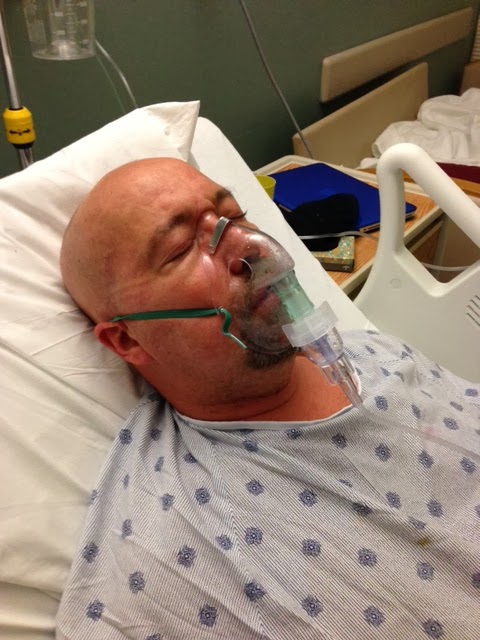
They determined I had pneumonia. Plain ol' no-GVH pneumonia.
I went through leukemia treatments for 10 months away from home in Nashville. (Thank you again to Open Arms, the American Cancer Society, and the apartments we stayed at for providing a home for my family for free for the entire 10 months.) I have fond memories of the whole process, of the people I met, of the family time we had, and of the grace of God that carried me through the process.

I didn't have any grace for pneumonia. The three days of pneumonia was worse than the 10 months of leukemia. Maybe that's just because the leukemia treatments are almost two years in the past, but I don't think so.
I wondered if I was going to die. I wondered if I had squandered the extra time on this earth that God gave me, so he was taking away the second half of my life.
I didn't die. I went in on Saturday, and I went home on Tuesday. My ribs and belly were terribly sore from coughing, but my ribs healed right up over the next couple days. Friday, however, the right side of my belly went to hurting more than ever. It got worse until I had to ask my wife to take me, again, to the emergency room.
It turns out that the antibiotics had thinned my blood so much that my INR was 7.1. Here's what that means. Normal is 1.0. If your blood is 2.0, then it's twice as thin as other people's blood. My blood is supposed to be between 2.0 and 3.0 because I'm prone to blood clots. They give me Coumadin, a blood thinner, to make that happen.
However, the dose I'm on of Coumadin is about as low as they give to anyone. I should not have spiked to 7.1, a dangerously thin blood level. They blame it on the antibiotics; I was taking 3 different ones.
What happened is that with all the coughing, I actually tore my rectus abdominus muscle (the one that gives you a six-pack if you're not as fat as me). The tear was internal to the muscle, or at least to the sheath around the muscle, and with my thin blood I bled into the wound until it was somewhat pressurized. Hence the intense and growing pain.
They gave me a good dose of Vitamin K and it dropped my INR to 1.7 in one day. The bleeding stopped, my tummy began to heal, and they sent me home ... I think on Tuesday exactly a week ago.
I lost 20 pounds during that process. That would be nice, but I'm sure half of it was muscle. Starting over on strength training again! It was already a slow process!
Two or three days ago I thought I would jump onto the first step of my stairs and back down again a few times to keep taxing and clearing my lungs, and to begin the process of getting some of the muscle back that I lost in my legs.
I didn't make it! I couldn't jump onto a 6-inch tall step! Aargh!
I made it this morning, though, and was able to hop up and down 4 or 5 times. I had to start over on the pushups, too. I did four on Saturday, five on Sunday, and six on Monday. I probably have to stay at six for a while because pushups require your stomach muscles to stabilize your body, and I don't want to re-injure that muscle.
Well, enough about me. I'm recovering. I went to work yesterday. I jogged about 50 yards there, taking 2 or 3 little jogs to reach that extreme distance (#sarcasm). I climbed the stairs a few times. I feel alive again, even if my 11-year-old daughter would have no problem beating me up right now. I'd have the advantage for about 10 seconds because I'm still stronger and much bigger than her, but then she could do whatever she wanted while I gasped for breath.
That would be dangerous, too, because she's really flexible and getting stronger because she's learning gymnastics. She comes up to my chin in height, but she has no problem kicking several inches higher than my head.
Okay, enough about me. Sorry for not staying in touch more. I'm going to back through this post and add pictures now.
Saturday, October 19, 2013
Is anyone getting stronger quickly?
Yesterday at Vanderbilt, I read about a lady who had breast cancer. They had a picture of her, so I'm guessing she is about 50. Of course, the picture was of her competing in a bodybuilding competition, after chemo and in remission.
Inspired by her, I came down this morning to the kitchen and realized that I really didn't have enough energy to make coffee. In fact, I couldn't really think straight enough to decide on what to have for breakfast.
"My wife will do all that for me," I thought.
I laid on the couch. I took a few deep breaths, and they made me cough. "Rough morning," I thought.
As I lay there, my son, who is visiting from college for the weekend, runs up the stairs shouting to his sister, "I have so much energy this morning. I just went and did a bunch of pushups just because I have so much energy."
Wow.
Then he went out to the car with a friend to get a screen protector for his phone. I thought, "I should do something." I forced myself off the couch for a new workout I read about. It's a 3-minute workout. In this case, I chose deep knee bends. I do as many as fast as I can, then pause for 10 seconds, do it again, and try to keep that up for 3 minutes. I've never made it past two.
In this case, it totally energized me. My youngest son saw me gasping for breath, and he asked if I was okay, but all the deep breathing cleared up my lungs.
Usually, when I try exercise to kick the doldrums out, it fails miserably. I just end up in bed, unable to do anything. This morning, though, I'm up and typing this blog now, feeling pretty good.
Of course, my wife has made me coffee by now, along with a bagel with egg and cheese.
So, my question is, if you've survived cancer, how are you doing at recovering energy, and what are you doing for exercise? How is the exercise working for you?
I was feeling like my stamina was improving. I was walking on the treadmill at the gym and monitoring my heart rate. Over a couple of weeks, I had to go up in speed a little to keep my heart rate above 120. That was exciting.
Inspired, I walked several days in a row, and my body crashed. I slept all day one Friday, and then had little energy all day Saturday. I was on my feet most of that day, so I know it wasn't the result of being lazy and laying around.
So I have now limited myself to 3-4 days per week of walking 2 miles, keeping my heart rate above 120.
So here's the story. Last week, I decided to time myself walking around the block (big block). I started up the street, and I was quickly gasping for breath. By the time I rounded the corner and started down Strawberry Rd, I was wondering if I'd relapsed.
Really. I made myself come to grips with the possibility of relapse and be ready to give thanks to God in all circumstances.
Then I turned onto Dartford, which was downhill, and I realized just how uphill the start of walk must have been. My breath quickly came back, me feet felt lighter than they've ever felt, my heart stopped pounding.
The second lap, I took the uphill much slower. I felt MUCH better.
Earlier this week, walking laps at work, in the rain, I ran a little (very little) just because I felt like it.
Progress is SLOOOOW. But it's progress.
Again, I'd love to hear your plan, your success and lack thereof, and whether you're headed for a bodybuilding contest post-chemo or just struggling along like me.
Inspired by her, I came down this morning to the kitchen and realized that I really didn't have enough energy to make coffee. In fact, I couldn't really think straight enough to decide on what to have for breakfast.
"My wife will do all that for me," I thought.
I laid on the couch. I took a few deep breaths, and they made me cough. "Rough morning," I thought.
As I lay there, my son, who is visiting from college for the weekend, runs up the stairs shouting to his sister, "I have so much energy this morning. I just went and did a bunch of pushups just because I have so much energy."
Wow.
Then he went out to the car with a friend to get a screen protector for his phone. I thought, "I should do something." I forced myself off the couch for a new workout I read about. It's a 3-minute workout. In this case, I chose deep knee bends. I do as many as fast as I can, then pause for 10 seconds, do it again, and try to keep that up for 3 minutes. I've never made it past two.
In this case, it totally energized me. My youngest son saw me gasping for breath, and he asked if I was okay, but all the deep breathing cleared up my lungs.
Usually, when I try exercise to kick the doldrums out, it fails miserably. I just end up in bed, unable to do anything. This morning, though, I'm up and typing this blog now, feeling pretty good.
Of course, my wife has made me coffee by now, along with a bagel with egg and cheese.
Question
So, my question is, if you've survived cancer, how are you doing at recovering energy, and what are you doing for exercise? How is the exercise working for you?
Exercise Story
I was feeling like my stamina was improving. I was walking on the treadmill at the gym and monitoring my heart rate. Over a couple of weeks, I had to go up in speed a little to keep my heart rate above 120. That was exciting.
Inspired, I walked several days in a row, and my body crashed. I slept all day one Friday, and then had little energy all day Saturday. I was on my feet most of that day, so I know it wasn't the result of being lazy and laying around.
So I have now limited myself to 3-4 days per week of walking 2 miles, keeping my heart rate above 120.
So here's the story. Last week, I decided to time myself walking around the block (big block). I started up the street, and I was quickly gasping for breath. By the time I rounded the corner and started down Strawberry Rd, I was wondering if I'd relapsed.
Really. I made myself come to grips with the possibility of relapse and be ready to give thanks to God in all circumstances.
Then I turned onto Dartford, which was downhill, and I realized just how uphill the start of walk must have been. My breath quickly came back, me feet felt lighter than they've ever felt, my heart stopped pounding.
The second lap, I took the uphill much slower. I felt MUCH better.
Earlier this week, walking laps at work, in the rain, I ran a little (very little) just because I felt like it.
Progress is SLOOOOW. But it's progress.
Again, I'd love to hear your plan, your success and lack thereof, and whether you're headed for a bodybuilding contest post-chemo or just struggling along like me.
Thursday, October 3, 2013
The New Normal Is a Lot Like the Old Normal
I was told to be prepared for the new normal. I had a good attitude about it. Leukemia, a slightly off version of Blastic Plasmacytoid Dendritic Cell Neoplasm (see tab above), chemotherapy, radiation, and a bone marrow transplant, and I was still alive. I'm a Jesus-follower. If my life were going to be marked by naps, day-by-day medical treatments, and a much slower pace, then it must be his will. All things work together for good for people like me, says the apostle Paul in Rom. 8:28. Life for me is about pleasing God. I'd like to do that without too much pain, but we all must accept the lot assigned to us unless God has given us the grace to change it.
I'm finding, though, that my new norm is not much different than my old norm except that I have to put on sunblock every day and exercise is nearly as effective.
The blisters, which I think I mentioned in the last post, went away within a few days of stopping my sunbathing program. I guess I'm going to be out of the sun forever.
My running program has been a disaster. For a while, I would run on the treadmill real slow (about 14 min/mile pace) for at least 4 minutes. I worked that up until I could run about 9 or 10 minutes straight, but it was torture. It was terribly painful, especially in my calves. After my last injury, where my left lower leg knotted up terribly and it took four weeks to get the pain out of my foot, my ability to run had dropped back to 2 or 3 minutes, still painful.
So I dropped that program as unsuccessful. Because we moved to Cordova (suburb of Memphis), we were able to get an inexpensive gym membership. I started to lift weights, and after six weeks I am very, very slightly stronger. That doesn't feel very successful, either.
But here's a program that appears to be working well for me. I was stunned on Sept. 6 that I was able to mostly walk, with a few 30-yard runs thrown in, a 5K in 47:18. That is under 16 minutes per mile. When I ran a mile back in June or July, I was only able to run it in 13:59, even though I ran the whole thing. The mile was really painful. This 5K wasn't really painful at all. It was hard, challenging, and I was sweating and breathing hard, but it was like a difficult workout, somewhat pleasant.
This gym has treadmills that keep track of my heart rate. I started walking at 2.6 mph (slower than 20 min/mile), and after a few minutes my heart rate would be up over 110. I sped up to 3.0 (exactly 20 min/mile), and my heart rate reached 120, which was my goal. Just over two weeks, I have had to speed the treadmill up to 3.4 to get my heart rate over 120. Clear, noticeable progress! There has been very little of that in my exercise programs up to now.
I'm sorry for those of you that have had a rougher route. I hope my story gives hope of things getting better, especially if you're careful about what you eat and stay active. Make friends; be outgoing. The statistics on the health of those with lots of friends and a few close ones versus loners are amazing. One study showed that loners were FOUR TIMES more likely to get a cold when a rhinovirus was dropped in their nose than those with strong social ties.
Why not be outgoing? If you have had a bone marrow transplant, and you can read this, you are a survivor. You have peered at death and walked away, probably not unscathed. You have a story to tell, and you are a conqueror. You have been victorious in battle, just like our soldiers in Iraq and Afghanistan and just like King David and so many other great warriors of the past. Hold your head high, make good use of your second life, and give everyone "what for."
And I'm thrilled for those that have done better. I'm still on daily Tacrolimus and steroids to stave off the rash that covered much of my body for over a year. My lower legs were completely covered in rash that entire time. Tamera is completely off her Tacro, and her last post said she's only been taking it once a week up to when they took her off of it.
Another GREAT story is Lexe Selman, who is PLAYING SOCCER FOR THE UNIVERSITY OF ARIZONA LESS THAN TWO YEARS AFTER BEING DIAGNOSED WITH AML. Come on. How can you beat that? I love her story. You MUST see the video and photos on her June 3, 2012 post. I cannot imagine playing in a soccer game between rounds of chemo, much less doing what she did.
Actually, yes I can. I could not play anything like my former self, much less like a young soccer star, between rounds of chemo, but I did play. Everyone was worried about me, but it was a lot of fun.
I remember a game of softball, after the transplant, when my thighs were skinnier than my knees. I had been walking stairs, so I could jog really slow. I hit the ball, thinking that I would surely remember that I couldn't run, but I didn't remember. My subconscious remembered the old days, commanded my body to take off, and my upper body was several feet down the baseline before my brain realized that I had left my legs behind. Somehow, I managed to turn sideways and roll as I hit the ground rather than faceplant.
I had someone run for me, even from home plate, the next time I came to bat.
Not being very smart, I went out and played soccer with teenagers and young men and women a couple weeks later. Same thing. "I have to beat her to the ball," and my body took off with my legs flailing behind me. I didn't roll, I sprawled. The moment when everyone looks at you and says, "You okay?" is pretty embarrassing.
Anyway, I thought y'all were due a little update. Back to the doctor on Oct. 11, when maybe I can go down on at least the steroids.
I'm finding, though, that my new norm is not much different than my old norm except that I have to put on sunblock every day and exercise is nearly as effective.
- I still am obsessed with work. My work involves not just running my warehouse in Selmer, and being a boss to the best crew of employees in the eastern United States, but also involves writing, which I love. I have so many writing projects that it is impossible I will ever get to them all. Thank God I have such a wonderful family, a lovely and enjoyable wife, and such a cute youngest daughter. (To my other children, you're wonderful, too, but most of you have moved out! Shame on you! Manu, you're not cute, just remarkably creative and becoming more responsible and reliable every day.)
- I worked in the warehouse packing product a couple weeks ago. I only worked a half day, and I'm sure I was much slower than the younger guys, but it was apparent that I could have worked the whole day at that packing station.
- I cover my arms, face, scalp, and neck in sunblock every day.
- On a semi-regular basis I forget my past, stay busy from dawn to dusk or even later, and then, one morning, I can't get up. It used to take at least 24 hours to recover from such an episode, but now I'm usually okay by afternoon if I stay in bed all morning.
- I have tried a couple times to get up, exercise, and thus overcome a "fatigue day" like that. Exercise is possible, and the ability to fall asleep standing up afterwards is impressive, but results have shown this to be a really bad idea.
The blisters, which I think I mentioned in the last post, went away within a few days of stopping my sunbathing program. I guess I'm going to be out of the sun forever.
My running program has been a disaster. For a while, I would run on the treadmill real slow (about 14 min/mile pace) for at least 4 minutes. I worked that up until I could run about 9 or 10 minutes straight, but it was torture. It was terribly painful, especially in my calves. After my last injury, where my left lower leg knotted up terribly and it took four weeks to get the pain out of my foot, my ability to run had dropped back to 2 or 3 minutes, still painful.
So I dropped that program as unsuccessful. Because we moved to Cordova (suburb of Memphis), we were able to get an inexpensive gym membership. I started to lift weights, and after six weeks I am very, very slightly stronger. That doesn't feel very successful, either.
But here's a program that appears to be working well for me. I was stunned on Sept. 6 that I was able to mostly walk, with a few 30-yard runs thrown in, a 5K in 47:18. That is under 16 minutes per mile. When I ran a mile back in June or July, I was only able to run it in 13:59, even though I ran the whole thing. The mile was really painful. This 5K wasn't really painful at all. It was hard, challenging, and I was sweating and breathing hard, but it was like a difficult workout, somewhat pleasant.
This gym has treadmills that keep track of my heart rate. I started walking at 2.6 mph (slower than 20 min/mile), and after a few minutes my heart rate would be up over 110. I sped up to 3.0 (exactly 20 min/mile), and my heart rate reached 120, which was my goal. Just over two weeks, I have had to speed the treadmill up to 3.4 to get my heart rate over 120. Clear, noticeable progress! There has been very little of that in my exercise programs up to now.
I'm sorry for those of you that have had a rougher route. I hope my story gives hope of things getting better, especially if you're careful about what you eat and stay active. Make friends; be outgoing. The statistics on the health of those with lots of friends and a few close ones versus loners are amazing. One study showed that loners were FOUR TIMES more likely to get a cold when a rhinovirus was dropped in their nose than those with strong social ties.
Why not be outgoing? If you have had a bone marrow transplant, and you can read this, you are a survivor. You have peered at death and walked away, probably not unscathed. You have a story to tell, and you are a conqueror. You have been victorious in battle, just like our soldiers in Iraq and Afghanistan and just like King David and so many other great warriors of the past. Hold your head high, make good use of your second life, and give everyone "what for."
And I'm thrilled for those that have done better. I'm still on daily Tacrolimus and steroids to stave off the rash that covered much of my body for over a year. My lower legs were completely covered in rash that entire time. Tamera is completely off her Tacro, and her last post said she's only been taking it once a week up to when they took her off of it.
Another GREAT story is Lexe Selman, who is PLAYING SOCCER FOR THE UNIVERSITY OF ARIZONA LESS THAN TWO YEARS AFTER BEING DIAGNOSED WITH AML. Come on. How can you beat that? I love her story. You MUST see the video and photos on her June 3, 2012 post. I cannot imagine playing in a soccer game between rounds of chemo, much less doing what she did.
Actually, yes I can. I could not play anything like my former self, much less like a young soccer star, between rounds of chemo, but I did play. Everyone was worried about me, but it was a lot of fun.
I remember a game of softball, after the transplant, when my thighs were skinnier than my knees. I had been walking stairs, so I could jog really slow. I hit the ball, thinking that I would surely remember that I couldn't run, but I didn't remember. My subconscious remembered the old days, commanded my body to take off, and my upper body was several feet down the baseline before my brain realized that I had left my legs behind. Somehow, I managed to turn sideways and roll as I hit the ground rather than faceplant.
I had someone run for me, even from home plate, the next time I came to bat.
Not being very smart, I went out and played soccer with teenagers and young men and women a couple weeks later. Same thing. "I have to beat her to the ball," and my body took off with my legs flailing behind me. I didn't roll, I sprawled. The moment when everyone looks at you and says, "You okay?" is pretty embarrassing.
Anyway, I thought y'all were due a little update. Back to the doctor on Oct. 11, when maybe I can go down on at least the steroids.
Sunday, August 11, 2013
High Speed Catch Up
I have to drive about 80 miles to work in the morning, so this is going to be a quick post. I am WAY overdue.
First, we moved to Cordova, a suburb of Memphis, which is why I'm driving 80 miles to work. I can telecommute 2 or 3 days a week, so that will work out okay, I hope.
I have met more neighbors in this partial week we've been here than I've met in my entire adult life (except at Rose Creek Village, of course). Tonight, I met the parents of an 8-year-old girl named Julia Cobb, who underwent a stem cell transplant (SCT) about 45 days ago. She doesn't have a blood cancer, like most SCT recipients. She has a type of "sarcoma." See Julia's story because I don't really know what that is except a solid tumor that started on her shoulder blade, was treated, relapsed, and then came back in several spots in her body.
I was so excited to meet them, and I really hope we get a chance to be a help to them. The father is a cancer survivor, too. His mother-in-law had exactly the same cancer, an intestinal cancer near as dangerous as pancreatic cancer, which is deadly. They went through treatment at the same hospital at the same time. He made it, and his mother-in-law didn't. Later his mother also died of cancer.
Nonetheless they were jovial. It was such a thrill to meet them, and to find out God put us three doors down from them!
Ok, real rapid update on me.
My treatment for my acute GVH, which worked pretty well, was to sun my lower legs and forearms, two or the worst rash areas, for 5 to 10 minutes per day. I have had almost no rash, rather than usually having rash an all my lower legs, half my thighs, a third of my trunk and on most of both arms.
Nonetheless, on Friday my NP--the wonderful and beautiful nurse Catherine--just about went into shock when I told her what I'd been doing. She hid it well, but she was horrified. She casually got the doctor as normal.
Dr. Savani came in saying, "We understand Dr. Pavao has prescribed a treatment, but we don't know this Dr. Pavao, and we don't think he is approved. So we are going to use the Catherine and Dr. Savani treatment. Haven't we warned you from day one not to be in the sun? Did we forget to tell you over and over to stay out of the sun?"
Seems I do remember that, but ...
He wasn't interested in "but." (I suspect he wanted to say "butthead.")
He explained that the danger is that I would move on to chronic GVH, and specifically a form of GVH rash called "sclerosis," in which my skin would harden like dry leather, restricting movement and being impossible to treat.
His lecture went on for a little while, and I sheepishly agreed to stop Dr. Pavao's treatment.
When we were leaving, my wife said, "It's possible they know some things about GVH and the sunshine that we don't know about."
I howled with laughter. Yeah, okay. I admit that eight years of medical school and years of daily experience with transplant recipients might give them a slightly better idea about sunshine and GVH than I have.
Otherwise, he said my blood counts are normal for a guy taking the medication I'm taking. He said I'm doing "100%"! (That should be pronounced with an Indian accent to get the effect.)
I don't get to drop my Prednisone (steroid) this time because of my sunshine treatment. Bad boy!
He also said, "No one can ever say 100%, but you are very unlikely to relapse."
So, I'm embarrassed but alive and apparently likely to continue to live ... if I stay out of the sun.
First, we moved to Cordova, a suburb of Memphis, which is why I'm driving 80 miles to work. I can telecommute 2 or 3 days a week, so that will work out okay, I hope.
I have met more neighbors in this partial week we've been here than I've met in my entire adult life (except at Rose Creek Village, of course). Tonight, I met the parents of an 8-year-old girl named Julia Cobb, who underwent a stem cell transplant (SCT) about 45 days ago. She doesn't have a blood cancer, like most SCT recipients. She has a type of "sarcoma." See Julia's story because I don't really know what that is except a solid tumor that started on her shoulder blade, was treated, relapsed, and then came back in several spots in her body.
I was so excited to meet them, and I really hope we get a chance to be a help to them. The father is a cancer survivor, too. His mother-in-law had exactly the same cancer, an intestinal cancer near as dangerous as pancreatic cancer, which is deadly. They went through treatment at the same hospital at the same time. He made it, and his mother-in-law didn't. Later his mother also died of cancer.
Nonetheless they were jovial. It was such a thrill to meet them, and to find out God put us three doors down from them!
Ok, real rapid update on me.
My treatment for my acute GVH, which worked pretty well, was to sun my lower legs and forearms, two or the worst rash areas, for 5 to 10 minutes per day. I have had almost no rash, rather than usually having rash an all my lower legs, half my thighs, a third of my trunk and on most of both arms.
Nonetheless, on Friday my NP--the wonderful and beautiful nurse Catherine--just about went into shock when I told her what I'd been doing. She hid it well, but she was horrified. She casually got the doctor as normal.
Dr. Savani came in saying, "We understand Dr. Pavao has prescribed a treatment, but we don't know this Dr. Pavao, and we don't think he is approved. So we are going to use the Catherine and Dr. Savani treatment. Haven't we warned you from day one not to be in the sun? Did we forget to tell you over and over to stay out of the sun?"
Seems I do remember that, but ...
He wasn't interested in "but." (I suspect he wanted to say "butthead.")
He explained that the danger is that I would move on to chronic GVH, and specifically a form of GVH rash called "sclerosis," in which my skin would harden like dry leather, restricting movement and being impossible to treat.
His lecture went on for a little while, and I sheepishly agreed to stop Dr. Pavao's treatment.
When we were leaving, my wife said, "It's possible they know some things about GVH and the sunshine that we don't know about."
I howled with laughter. Yeah, okay. I admit that eight years of medical school and years of daily experience with transplant recipients might give them a slightly better idea about sunshine and GVH than I have.
Otherwise, he said my blood counts are normal for a guy taking the medication I'm taking. He said I'm doing "100%"! (That should be pronounced with an Indian accent to get the effect.)
I don't get to drop my Prednisone (steroid) this time because of my sunshine treatment. Bad boy!
He also said, "No one can ever say 100%, but you are very unlikely to relapse."
So, I'm embarrassed but alive and apparently likely to continue to live ... if I stay out of the sun.
Monday, June 10, 2013
Alternative and Natural Medicine Rant
After reading one more attack on the medical system from someone praising a good idea (eating nutritionally) and wishful thinking (that herbs cure cancer), I have to say something.
Admittedly, drug companies are out for profit. Despite this Ida-Rubicin, Vincristin, Cytarabine, Methatextrate, tacrolimus, prednisone, and other drugs saved my life. Zofran, Prilosec, and other medications made the treatment I required bearable. Those all came from pharmaceutical companies.
The reason that corrupt, money-hungry drug manufacturers save lives is because there is a scientific method and there are laws and agencies requiring the medical establishment to make every effort to follow the scientific method. It has its shortcomings, but because hospitals, researchers, and pharmaceutical companies have to report their results publicly, they are scrutinized, and we learn.
The result? A few years ago a guy with BPDCN-like leukemia, like me, was guaranteed dead in two years, probably less, and that only if he went through chemotherapy. Diagnosis to death for aggressive leukemias killed in an average of 6 weeks in the 1960's.
Because of a lot of research, we now know you can save BPDCN patients by giving them a bone marrow transplant. Only five or six years ago, such a transplant killed 30% of the recipients. This year, however, it is down to 5%.
FIVE PERCENT! People ought to be cheering them, not attacking them.
How did they do it? By expensive drugs? Partially. They always had the expensive drugs. They dropped the death rate from 30% to 5% by assigning only a few patients to one nurse practitioner. The NP diligently tracks the patient's health and gives advice, including nutritional, attitude, and lifestyle advice. The NP learns the patients, sees them often, and notices if a problem arises.
So let's compare that to alternative, natural medicine. I hope it's no surprise to you that I researched the dozen or so natural therapies that well-meaning friends recommended to me. What did I find?
Nothing. No records. No people that could be contacted. First names and user names with comments on web site. Absolutely nothing verifiable. I was insulted by one "camp" that promises turned around health in three weeks because I asked them if they had any references to prove their method worked.
Gerson Therapy has recently started releasing their records. Kudos to them. The results are not very impressive, but they do have results. Gerson Therapy, according to the Gerson Therapy web site, doesn't do anything for acute leukemia, so I quite researching them once I found out.
Everyone else? Nice claims. Wishful thinking. No evidence.
I once looked up the claims that a company called Lose Your Back Pain (I think) was making for an enzyme that you could take by mouth. They said it would relax your muscles, relieve pain, and help your back.
I looked up the enzyme on the PubMed database. It was there! Only one study, but the study concluded that the enzyme relieved pain and inflammation as well as ibuprofen.
The problem is, very few alternative medicine claims pan out like that. And when they do, the herbs or enzymes are sold almost as expensively as pharmaceuticals. A small dose of the enzymes costs $60/month.
People make excuses. "No one will study these herbs because they can't make money on them."
That is just not true. The last time I checked there were three ongoing studies on the efficacy of Pomegranate juice for preventing prostate cancer. It's hard to find a natural food claim that hasn't been studied.
I want to make it clear that I agree with the importance of good health. We could greatly reduce cancer, heart disease, diabetes, and many other diseases by eating more healthy and exercising.
However, it is ridiculous to claim that doctors don't know and don't promote healthy eating and exercise.
Miracle health, from drinking Acai juice, doing Pilates, or taking colloidal silver, is a fantasy. Colloidal silver, by the way, can permanently turn your skin gray if you drink too much of it. Oh, yeah, the medical establishment has studied colloidal silver, too.
It makes me angry that people with no evidence to back up their claims, and who have no intention of keeping track of the success of their claims, fire salvos at a medical establishment that has a lot of problems, but which has almost doubled our expected life span over the last century.
Admittedly, drug companies are out for profit. Despite this Ida-Rubicin, Vincristin, Cytarabine, Methatextrate, tacrolimus, prednisone, and other drugs saved my life. Zofran, Prilosec, and other medications made the treatment I required bearable. Those all came from pharmaceutical companies.
The reason that corrupt, money-hungry drug manufacturers save lives is because there is a scientific method and there are laws and agencies requiring the medical establishment to make every effort to follow the scientific method. It has its shortcomings, but because hospitals, researchers, and pharmaceutical companies have to report their results publicly, they are scrutinized, and we learn.
The result? A few years ago a guy with BPDCN-like leukemia, like me, was guaranteed dead in two years, probably less, and that only if he went through chemotherapy. Diagnosis to death for aggressive leukemias killed in an average of 6 weeks in the 1960's.
Because of a lot of research, we now know you can save BPDCN patients by giving them a bone marrow transplant. Only five or six years ago, such a transplant killed 30% of the recipients. This year, however, it is down to 5%.
FIVE PERCENT! People ought to be cheering them, not attacking them.
How did they do it? By expensive drugs? Partially. They always had the expensive drugs. They dropped the death rate from 30% to 5% by assigning only a few patients to one nurse practitioner. The NP diligently tracks the patient's health and gives advice, including nutritional, attitude, and lifestyle advice. The NP learns the patients, sees them often, and notices if a problem arises.
So let's compare that to alternative, natural medicine. I hope it's no surprise to you that I researched the dozen or so natural therapies that well-meaning friends recommended to me. What did I find?
Nothing. No records. No people that could be contacted. First names and user names with comments on web site. Absolutely nothing verifiable. I was insulted by one "camp" that promises turned around health in three weeks because I asked them if they had any references to prove their method worked.
Gerson Therapy has recently started releasing their records. Kudos to them. The results are not very impressive, but they do have results. Gerson Therapy, according to the Gerson Therapy web site, doesn't do anything for acute leukemia, so I quite researching them once I found out.
Everyone else? Nice claims. Wishful thinking. No evidence.
I once looked up the claims that a company called Lose Your Back Pain (I think) was making for an enzyme that you could take by mouth. They said it would relax your muscles, relieve pain, and help your back.
I looked up the enzyme on the PubMed database. It was there! Only one study, but the study concluded that the enzyme relieved pain and inflammation as well as ibuprofen.
The problem is, very few alternative medicine claims pan out like that. And when they do, the herbs or enzymes are sold almost as expensively as pharmaceuticals. A small dose of the enzymes costs $60/month.
People make excuses. "No one will study these herbs because they can't make money on them."
That is just not true. The last time I checked there were three ongoing studies on the efficacy of Pomegranate juice for preventing prostate cancer. It's hard to find a natural food claim that hasn't been studied.
I want to make it clear that I agree with the importance of good health. We could greatly reduce cancer, heart disease, diabetes, and many other diseases by eating more healthy and exercising.
However, it is ridiculous to claim that doctors don't know and don't promote healthy eating and exercise.
Miracle health, from drinking Acai juice, doing Pilates, or taking colloidal silver, is a fantasy. Colloidal silver, by the way, can permanently turn your skin gray if you drink too much of it. Oh, yeah, the medical establishment has studied colloidal silver, too.
It makes me angry that people with no evidence to back up their claims, and who have no intention of keeping track of the success of their claims, fire salvos at a medical establishment that has a lot of problems, but which has almost doubled our expected life span over the last century.
Saturday, June 8, 2013
So Much To Talk About!
The last post was named Nothing To Talk About, so I thought I'd name this the opposite as some sort of interesting pun, though now that I think about it, I can't imagine what would be interesting about that.
But it's an appropriate title.
Life's a whirlwind. I'm a writer, and it's not just this blog. I write the content for Christian History for Everyman and Proof of Evolution. I edit and upload the pages for A Brief History of Soccer. Well, I should say that I think about writing the content for Proof of Evolution. I don't have time for it.
I do have two blogs that I do find time for, though, this one and The Rest of the Old, Old Story.
I recently wrote a 40-page booklet called The Apostles' Gospel. I was supposed to do a final edit on it this last week, but I couldn't get to it. I spent all day Thursday in Nashville getting checkups at Vanderbilt, which I wrote about. Friday we were out looking at warehouses all day because our business has outgrown its current building, and we need to move. Between the heat and all the walking—one of those warehouses was like a small town—I was exhausted and had to cancel a teaching I was to do Friday night.
Today I edited an old booklet of mine called How To Make a Church Fail. It purports to be a discovered letter by Satan explaining how he got the church to compromise with the government in the fourth-century Roman empire. Call it an unusual form of historical fiction. I haven't read it myself in three years, and I loved it.
Okay, maybe that's a weird thing to say about my own book.
It'll be out on Kindle in no more than a month, I'm sure. My assistant and daughter-in-law, Dassi, is furiously fast at turning edited copy into a booklet with an incredible book cover. She adapted the terrific painting done for me by Jeremiah Briggs into the best cover I've even seen. Too bad's it on a 20-page booklet. On the other hand, booklets are cheap. The artwork on the cover will be worth more than the purchase price!

I've already started on a book called The New Law. It's only got eight pages so far, but the only review I've gotten was, "I'm so disappointed it ended there."
I have a booklet somewhat done that I found on my hard drive called The Gospel and Grace. I would love to edit that one, too, but I don't know when I'll have time.
In the meantime, I just sent an email today asking for Dassi's help on turning the "Yippee! I Have Leukemia" blog into a book. I've been meaning to do that for a year, but ... yeah, I haven't had time.
Thursday and Friday, the days I went to Vanderbilt and looked at warehouses, I spent free time on the phone trying to work out pre-approval for a loan so we can buy a house in Memphis. Friday afternoon, a customer with an Irish brogue came in and struck up conversation. It was great, but I got a phone call and questions from the warehouse staff during the conversation, and when I was done, I couldn't think straight. I was light-headed, and the world looked extraordinarily yellow.
I'm featuring my first book, In the Beginning Was the Logos, on Kindle boards on Monday. It will be at 99 cents for Kindle through all of June, despite the fact that it is over 400 pages of captivating history and years of research. (The most common remark about the book is, "I can't believe you did all this research!" The second most common is, "Wow, this history book was actually interesting.") It will also be featured on Bookbub.com and BookGorilla.com sometime this month.
What I got really excited about, though, was that the manager of the Buffalo Wild Wings in Jackson asked me to come down and do a book signing. That would be fun!
I gave him a signed copy of the book when it came out. I talk to him here and there because we've ordered a massive amount of wings for our warehouse a couple time as a thank you to the workers. If they were closer to our warehouse, we'd do it more often!
But it's an appropriate title.
Life's a whirlwind. I'm a writer, and it's not just this blog. I write the content for Christian History for Everyman and Proof of Evolution. I edit and upload the pages for A Brief History of Soccer. Well, I should say that I think about writing the content for Proof of Evolution. I don't have time for it.
I do have two blogs that I do find time for, though, this one and The Rest of the Old, Old Story.
I recently wrote a 40-page booklet called The Apostles' Gospel. I was supposed to do a final edit on it this last week, but I couldn't get to it. I spent all day Thursday in Nashville getting checkups at Vanderbilt, which I wrote about. Friday we were out looking at warehouses all day because our business has outgrown its current building, and we need to move. Between the heat and all the walking—one of those warehouses was like a small town—I was exhausted and had to cancel a teaching I was to do Friday night.
Today I edited an old booklet of mine called How To Make a Church Fail. It purports to be a discovered letter by Satan explaining how he got the church to compromise with the government in the fourth-century Roman empire. Call it an unusual form of historical fiction. I haven't read it myself in three years, and I loved it.
Okay, maybe that's a weird thing to say about my own book.
It'll be out on Kindle in no more than a month, I'm sure. My assistant and daughter-in-law, Dassi, is furiously fast at turning edited copy into a booklet with an incredible book cover. She adapted the terrific painting done for me by Jeremiah Briggs into the best cover I've even seen. Too bad's it on a 20-page booklet. On the other hand, booklets are cheap. The artwork on the cover will be worth more than the purchase price!

I've already started on a book called The New Law. It's only got eight pages so far, but the only review I've gotten was, "I'm so disappointed it ended there."
I have a booklet somewhat done that I found on my hard drive called The Gospel and Grace. I would love to edit that one, too, but I don't know when I'll have time.
In the meantime, I just sent an email today asking for Dassi's help on turning the "Yippee! I Have Leukemia" blog into a book. I've been meaning to do that for a year, but ... yeah, I haven't had time.
Thursday and Friday, the days I went to Vanderbilt and looked at warehouses, I spent free time on the phone trying to work out pre-approval for a loan so we can buy a house in Memphis. Friday afternoon, a customer with an Irish brogue came in and struck up conversation. It was great, but I got a phone call and questions from the warehouse staff during the conversation, and when I was done, I couldn't think straight. I was light-headed, and the world looked extraordinarily yellow.
Sponsored Link
I'm featuring my first book, In the Beginning Was the Logos, on Kindle boards on Monday. It will be at 99 cents for Kindle through all of June, despite the fact that it is over 400 pages of captivating history and years of research. (The most common remark about the book is, "I can't believe you did all this research!" The second most common is, "Wow, this history book was actually interesting.") It will also be featured on Bookbub.com and BookGorilla.com sometime this month.
What I got really excited about, though, was that the manager of the Buffalo Wild Wings in Jackson asked me to come down and do a book signing. That would be fun!
I gave him a signed copy of the book when it came out. I talk to him here and there because we've ordered a massive amount of wings for our warehouse a couple time as a thank you to the workers. If they were closer to our warehouse, we'd do it more often!
Subscribe to:
Posts (Atom)